Dental Scaling in Viman Nagar, Pune: Does It Damage Enamel?
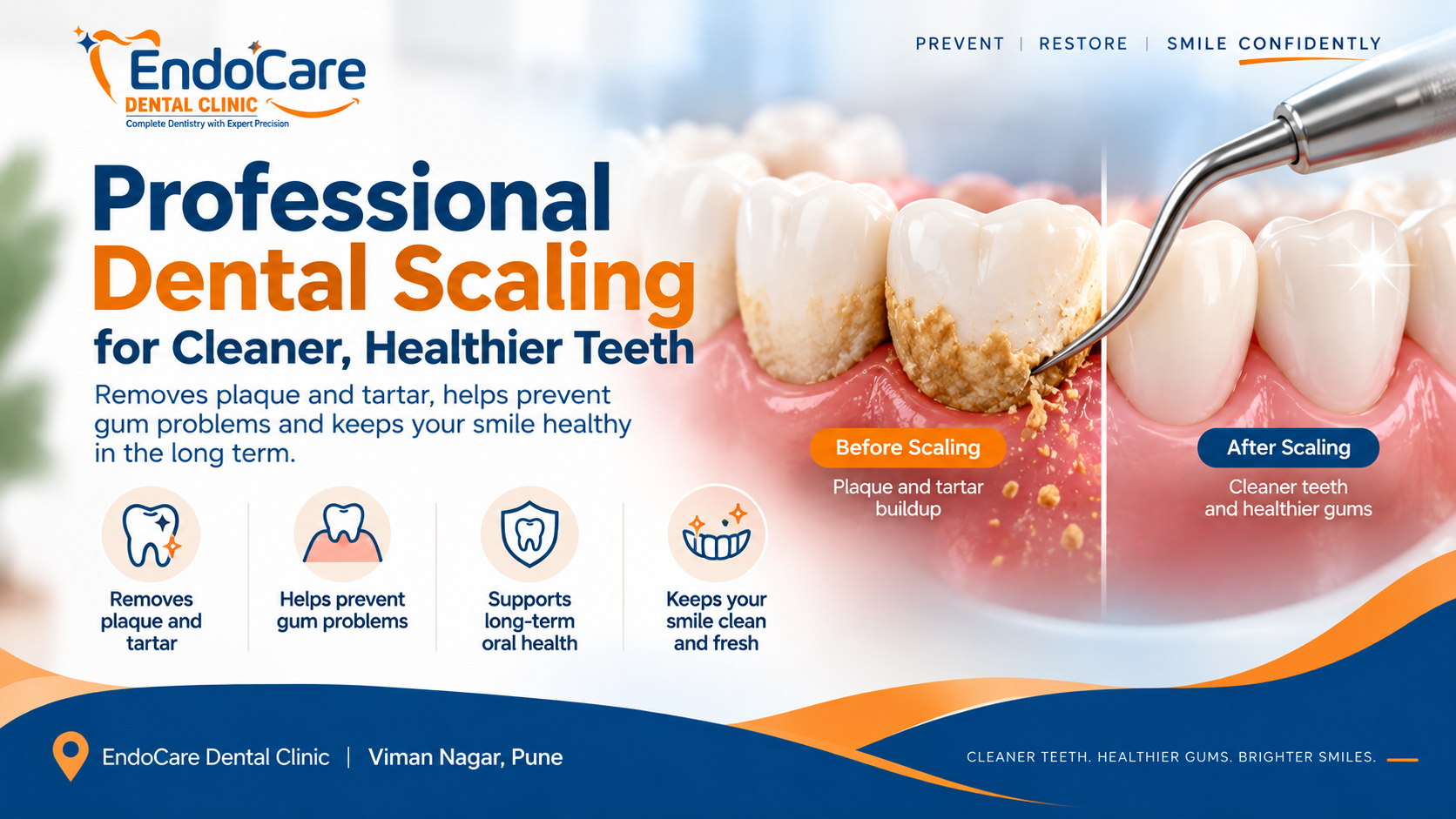
Does Teeth Scaling Damage Enamel? A Guide to Dental Cleaning in Viman Nagar, Pune
Have you ever avoided professional teeth cleaning because someone told you that scaling weakens teeth, creates gaps or damages enamel?
These concerns are common, but they do not tell the whole story.
Professional dental scaling is intended to remove plaque and hardened tartar deposits from the teeth, not to remove healthy enamel. When performed appropriately, it is an important part of preventive dental care. Temporary sensitivity can occur, and the experience varies depending on the condition of your teeth and gums.
If you are considering dental scaling in Viman Nagar, Pune, understanding what the procedure does, why your teeth might feel different afterwards and how to maintain good oral hygiene can help you make an informed decision.
At EndoCare Dental Clinic in Viman Nagar, Pune, a dental consultation can help determine whether you need routine cleaning, further gum assessment or another form of treatment based on your oral health.
In This Article
- What Is Dental Scaling?
- Does Teeth Scaling Damage Enamel?
- Why Do Teeth Feel Sensitive or Look Different After Scaling?
- What Happens During Professional Teeth Cleaning?
- How Often Should You Get Dental Scaling?
- How to Maintain Your Teeth After Cleaning
- When Should You Visit a Dentist?
- Frequently Asked Questions
What Is Dental Scaling?
Dental scaling is a professional dental cleaning procedure that removes plaque and hardened deposits called tartar, or calculus, from the surfaces of the teeth and around the gumline.
Plaque is a sticky film that forms on teeth. When it is not adequately removed through daily brushing and cleaning between the teeth, some of it can harden into tartar. Once tartar has formed, brushing alone cannot reliably remove it.
Tartar accumulation can make it more difficult to maintain oral hygiene and can contribute to gum inflammation.
During a dental check-up, a dentist assesses the teeth and gums to determine whether professional scaling is needed and whether any additional treatment is appropriate.
What Is the Difference Between Plaque and Tartar?
Plaque is a soft bacterial film that develops continuously on teeth. Regular brushing and cleaning between teeth help control its accumulation.
Tartar is hardened plaque that adheres to tooth surfaces. It usually requires professional removal.
This distinction matters because improving your brushing technique can help prevent further plaque accumulation, but it will not remove established tartar deposits effectively.
Professional teeth cleaning in Viman Nagar, Pune, can help address deposits that are difficult to remove at home.
Does Teeth Scaling Damage Enamel?
When performed appropriately, dental scaling is designed to remove plaque and tartar without removing healthy tooth enamel.
Enamel is the hard outer layer that protects the visible portion of each tooth. Professional scaling targets deposits attached to the teeth rather than deliberately removing this protective layer.
However, the procedure should be based on an assessment of your teeth, gums and the amount and location of the deposits.
Why Is Scaling Sometimes Blamed for Tooth Damage?
Several changes may become noticeable after professional cleaning.
- Previously hidden tooth surfaces become visible: Tartar deposits can cover portions of teeth near the gumline. Removing these deposits reveals the underlying tooth surfaces.
- Existing gum problems become more noticeable: Inflamed or receding gums can affect how teeth appear and feel.
- Temporary sensitivity may develop: Teeth can feel more sensitive after cleaning, particularly when gum recession or exposed root surfaces are already present.
- Pre-existing problems become easier to recognise: A dental examination may reveal gum disease, tooth decay or other issues that were not previously obvious.
These changes do not automatically mean the enamel has been damaged by scaling.
If you notice persistent sensitivity, pain or changes in tooth mobility after a cleaning appointment, have your dentist examine the affected area rather than assuming the symptoms are a normal consequence of scaling.
Why Do Teeth Feel Sensitive or Look Different After Scaling?
Some patients notice that their teeth feel different after tartar removal. Understanding the possible reasons can help distinguish temporary changes from problems that need attention.
1. Temporary Tooth Sensitivity
You may experience sensitivity to cold water, hot beverages or certain foods after professional cleaning.
This can be more noticeable if you already have gum recession, exposed root surfaces or inflamed gums.
Sensitivity may settle, but persistent or severe symptoms should be assessed by a dentist. Do not assume that all post-cleaning discomfort is harmless.
2. Spaces Between Teeth May Become More Noticeable
Tartar can accumulate between teeth and near the gumline. When these deposits are removed, existing spaces may become more visible.
This can create the impression that scaling has created gaps.
In reality, the visible spaces may have been partly occupied by tartar before the cleaning. Gum recession or existing periodontal problems can also affect the appearance of these spaces.
3. Teeth May Feel Loose
If a tooth feels loose, it is important not to dismiss the symptom as an expected result of scaling.
Advanced gum disease and loss of supporting tissues can contribute to tooth mobility. Removing tartar does not necessarily cause this underlying problem, but the cleaning process may make an existing concern more noticeable.
If you notice tooth mobility, seek a dental assessment to identify the cause and discuss appropriate treatment.
4. Teeth May Look Cleaner but Not Whiter
Professional scaling removes deposits from tooth surfaces. As a result, teeth may look cleaner or appear less stained.
However, dental scaling is not the same as professional teeth whitening. It does not guarantee a particular shade of tooth colour.
If your main concern is the colour of your teeth rather than plaque or tartar, ask your dentist whether a separate whitening assessment would be appropriate.
What Happens During Professional Teeth Cleaning?
If you are planning dental scaling in Viman Nagar, Pune, knowing what to expect can make the appointment easier to approach.
The exact procedure depends on your oral health and the amount and location of the deposits.
Step 1: Dental Examination
The dentist examines your teeth and gums and discusses any concerns, such as sensitivity, bleeding, discomfort or difficulty cleaning certain areas.
This assessment helps determine whether routine scaling is appropriate or whether additional evaluation is needed.
Step 2: Removal of Plaque and Tartar
The dentist uses appropriate dental instruments to remove deposits from the tooth surfaces and around the gumline.
The technique and instruments selected depend on the clinical findings.
Step 3: Additional Cleaning, If Appropriate
Polishing may be included when indicated. If the examination suggests gum disease or deeper deposits below the gumline, the dentist may recommend further assessment or a more specialised cleaning procedure.
Routine scaling and deep periodontal cleaning are not interchangeable treatments.
Step 4: Oral Hygiene Guidance
Your dentist may advise you on brushing technique, cleaning between teeth and other measures suited to your needs.
The aim is to help you maintain the results of professional cleaning and reduce the accumulation of new plaque.
How Often Should You Get Dental Scaling?
There is no single dental scaling schedule that is suitable for everyone.
Some people may need routine cleaning less frequently, while others may benefit from more frequent professional assessment and maintenance. The appropriate interval depends on factors such as:
- How quickly plaque and tartar accumulate.
- The condition of your gums.
- Your ability to clean all tooth surfaces effectively.
- Whether you have a history of gum disease.
- Your individual oral health risks and previous dental findings.
For example, a person with periodontal disease may require a different maintenance schedule from someone whose gums are healthy and who maintains effective daily oral hygiene.
Rather than choosing an interval solely because it is commonly recommended, ask your dentist how frequently you should return based on your individual needs.
If you live or work in Viman Nagar, Kalyani Nagar, Wadgaon Sheri, Kharadi or Dhanori, a dental check-up at EndoCare Dental Clinic's Viman Nagar location can help you discuss an appropriate preventive-care plan.
How to Maintain Your Teeth After Cleaning
Professional dental scaling removes existing deposits, but plaque begins to accumulate again. Your daily oral hygiene routine remains essential.
Brush Twice Daily
Brush twice a day using fluoride toothpaste and a soft-bristled toothbrush. Clean the outer, inner and chewing surfaces of your teeth carefully.
Avoid brushing aggressively, particularly around the gumline.
Clean Between Your Teeth
A toothbrush may not adequately clean tight spaces between teeth.
Use dental floss or another suitable interdental cleaning aid daily. Your dentist can help you select the appropriate option for your tooth spacing and gum health.
Avoid Trying to Remove Tartar Yourself
Do not scrape your teeth with sharp objects or use improvised tools to remove hardened deposits.
Attempting to remove tartar at home can injure the gums or damage tooth surfaces. Arrange professional cleaning when deposits cannot be removed through routine oral hygiene.
Attend Dental Check-Ups
Regular dental examinations can help identify plaque accumulation, early gum problems and tooth decay before they become more difficult to manage.
Your dentist can recommend the appropriate interval for your next visit.
Follow Personalised Advice if You Have Gum Problems
If you have gum recession, persistent sensitivity or a history of periodontal disease, you may need advice beyond routine brushing and flossing.
A dentist can assess your gum health and recommend suitable maintenance or treatment.
When Should You Visit a Dentist?
Consider arranging a dental examination if you notice:
- Hardened yellow or brown deposits near the gumline.
- Persistent bad breath despite regular oral hygiene.
- Gums that bleed repeatedly during brushing or interdental cleaning.
- Gum recession or visible changes around your teeth.
- Sensitivity that persists or worsens.
- Teeth that feel loose.
- Swelling, discharge or discomfort around the gums.
These signs can have different causes, and not every problem requires scaling alone.
Seek prompt dental assessment if you experience significant swelling, severe or worsening pain, fever or other signs of a spreading infection. Do not delay care while waiting for a routine cleaning appointment.
If you are unsure whether you need routine teeth cleaning or treatment for a gum problem, an examination can help clarify the next step.
Frequently Asked Questions
1. Does dental scaling damage tooth enamel?
Dental scaling is intended to remove plaque and hardened tartar, not healthy enamel. When performed appropriately, it should not remove healthy enamel. If you experience persistent sensitivity or discomfort after cleaning, consult your dentist.
2. Does scaling make teeth loose?
Scaling does not necessarily make teeth loose. If teeth feel mobile, underlying gum disease or damage to the supporting tissues may be responsible. A dental examination is needed to determine the cause.
3. Will I develop gaps between my teeth after scaling?
Existing spaces may become more visible after tartar is removed because deposits can occupy areas near or between teeth. Gum recession and periodontal problems can also affect the appearance of these spaces.
4. Is dental scaling painful?
The experience varies depending on the amount of tartar, gum inflammation and individual sensitivity. Some people experience little discomfort, while others may find certain areas sensitive. Tell your dentist if you feel pain during the procedure so your comfort can be assessed.
5. How often should I get teeth cleaning in Viman Nagar, Pune?
The appropriate interval depends on your gum health, tartar accumulation and individual risk factors. Your dentist can recommend a suitable schedule after examining your teeth and gums.
6. Does dental scaling whiten teeth?
Scaling removes plaque, tartar and certain surface deposits, which may make teeth look cleaner. It is not a substitute for professional whitening and does not guarantee a specific tooth shade.
Book a Dental Cleaning Consultation in Viman Nagar, Pune
Healthy teeth and gums depend on both effective daily oral hygiene and appropriate professional care.
If you are concerned about tartar accumulation, tooth sensitivity, gum health or whether you need dental scaling, arrange a dental examination before deciding on treatment.
At EndoCare Dental Clinic in Viman Nagar, Pune, you can discuss your oral health concerns and receive advice based on your dental examination.
Patients from nearby areas, including Kalyani Nagar, Wadgaon Sheri, Kharadi and Dhanori, can contact the clinic's Viman Nagar location to enquire about an appointment.
Book your dental consultation: Visit the EndoCare Dental Clinic website to get in touch with the clinic.
The information in this article is for general educational purposes and does not replace an individual dental examination.
This article is general information from the EndoCare Dental Clinic team. It is not a diagnosis or a substitute for an examination by your dentist. Please consult a dentist for advice about your own teeth.