Dental Veneers in Viman Nagar, Pune: Cost, Benefits & Suitability
DENTAL VENEERS COST IN VIMAN NAGAR, PUNE: TYPES, BENEFITS AND WHAT AFFECTS THE PRICE
If you are considering dental veneers to improve the appearance of your front teeth, one of your first questions may be: How much do dental veneers cost in Pune?
The answer depends on several factors, including the type of veneer, the number of teeth being treated, the condition of your existing teeth and the complexity of the planned restoration. Porcelain veneers and composite veneers differ in material, fabrication, treatment process and maintenance requirements, so their costs may also differ.
At EndoCare Dental Clinic in Viman Nagar, Pune, patients considering cosmetic dental treatment should first understand their options and undergo an appropriate dental assessment. This helps establish whether veneers are suitable and what the proposed treatment would involve.
This guide explains dental veneer cost factors, the differences between porcelain and composite veneers, the treatment process, and the questions to ask before making a decision.
IN THIS ARTICLE
WHAT ARE DENTAL VENEERS?
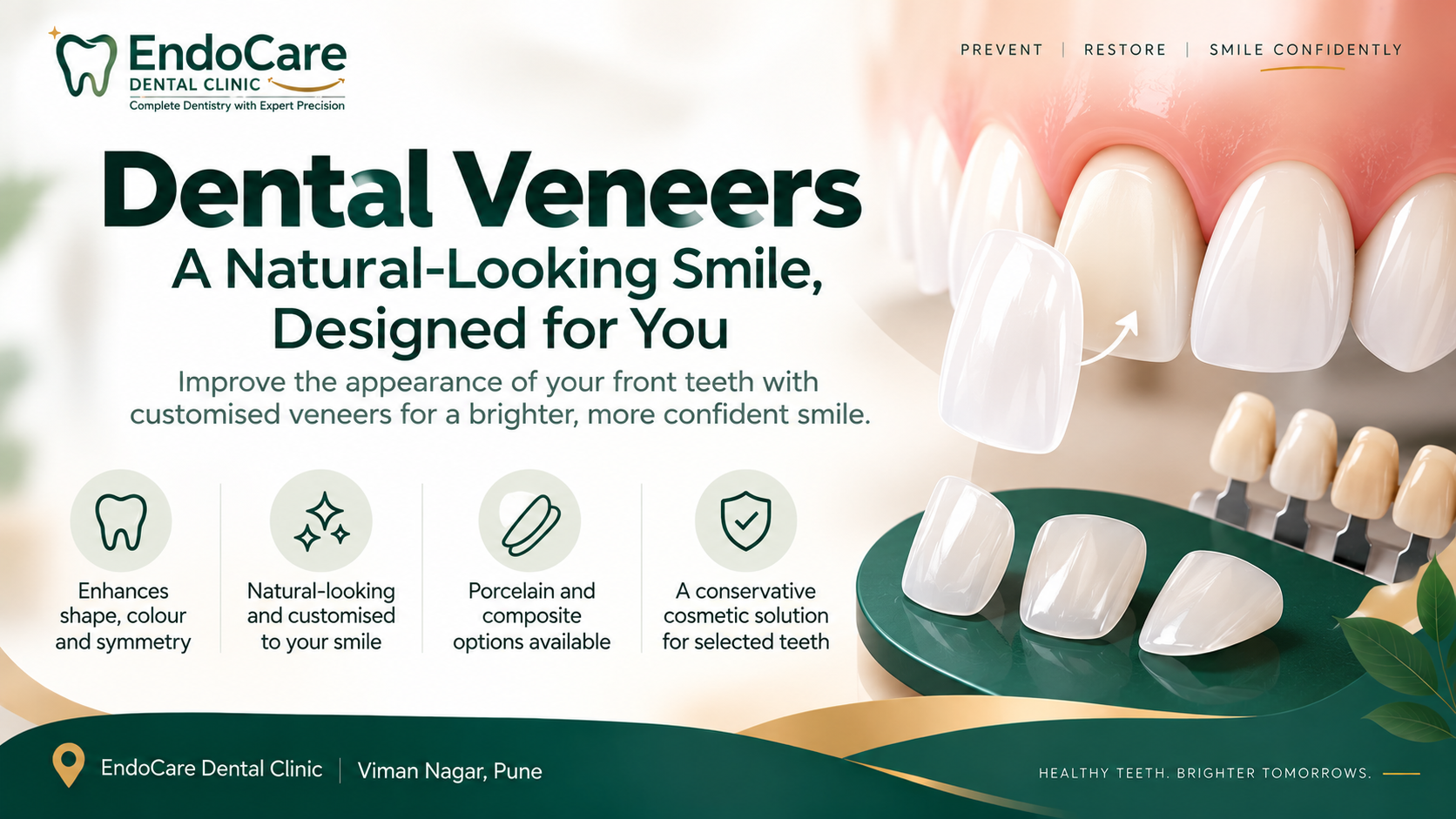
Dental veneers are thin, custom-made coverings bonded to the front surface of selected teeth. They are designed to improve the appearance of teeth by modifying their visible colour, shape, size or proportions.
Depending on the clinical situation, dental veneers may be considered for:
-
Chipped or slightly worn front teeth
-
Teeth with irregular shapes or uneven edges
-
Certain gaps between front teeth
-
Discolouration that does not respond adequately to appropriate whitening treatment
-
Teeth whose visible proportions need cosmetic correction
Veneers cover the front surface of a tooth, unlike a conventional crown, which covers a larger portion of the tooth. The appropriate restoration depends on the tooth's condition, the amount of remaining tooth structure and the patient's cosmetic goals.
Veneers are not a universal solution for every smile concern. For example, significant tooth misalignment may be better addressed through orthodontic treatment, while decay or gum disease needs appropriate treatment before cosmetic restoration is considered.
TYPES OF DENTAL VENEERS: PORCELAIN VS COMPOSITE
The two commonly discussed veneer materials are porcelain and composite resin. The material selected affects the appearance, fabrication process, maintenance and overall treatment cost.
Porcelain Dental Veneers
Porcelain veneers are custom-made restorations fabricated to fit the front surface of selected teeth. Their appearance can be carefully planned to complement the colour, shape and proportions of the surrounding teeth.
Factors that may make porcelain veneers worth considering include:
-
A customised appearance and surface finish
-
Good resistance to staining compared with many composite materials
-
A laboratory fabrication process that allows detailed shaping and colour planning
Porcelain veneers generally involve more extensive planning and laboratory work than direct composite veneers. They may also cost more, although the actual fee depends on the material, laboratory requirements and individual treatment plan.
Composite Dental Veneers
Composite veneers use tooth-coloured resin that is bonded and shaped on the tooth or, in some cases, fabricated using a different composite technique.
Depending on the case, composite treatment may involve fewer visits and less enamel removal than porcelain veneer treatment. Composite restorations can also be easier to repair when small areas chip or become damaged.
However, composite materials may be more susceptible to staining, surface wear and chipping than porcelain. The outcome and maintenance requirements depend on the material, technique, bite and oral habits.
Which Type of Veneer Is More Affordable?
Composite veneers may be a lower-cost option in some cases, while porcelain veneers may involve higher material and laboratory expenses. However, it is important to compare the complete treatment plans rather than choosing solely by the initial fee.
Ask your dentist to explain the expected appearance, tooth preparation, repair options, maintenance and potential replacement requirements for each suitable option.
WHAT AFFECTS DENTAL VENEERS COST IN PUNE?
There is no single dental veneer price that applies to every patient. If you are comparing dental veneers cost in Viman Nagar, Pune, the following factors can influence your estimate.
-
Type of Veneer Material
Porcelain and composite veneers differ in their materials, fabrication methods and clinical characteristics. The chosen material is one of the factors that can affect the overall cost.
-
Number of Teeth Being Treated
The cost of treating one tooth will differ from the cost of treating several teeth. Each additional veneer requires individual planning and fabrication or placement.
The number of teeth should be based on the clinical assessment and the desired outcome, rather than assuming that every visible tooth needs a veneer.
-
Condition of the Existing Teeth
Teeth with untreated decay, damaged restorations or other dental problems may require treatment before veneers can be considered. The supporting gum tissues and bite also need assessment.
Any additional treatment should be explained separately in the proposed treatment plan.
-
Complexity of Shape and Shade Matching
The shape, proportions, shade and alignment of the teeth influence the planning process. Matching veneers to surrounding natural teeth can require detailed clinical and laboratory work.
The complexity of the case may affect the time and resources needed to achieve the planned result.
-
Laboratory and Fabrication Requirements
Custom-made porcelain veneers require laboratory fabrication. The material selected, laboratory process and individual design requirements may influence the final fee.
-
Additional Dental Procedures
Some patients may need treatment for gum disease, decay, damaged teeth or bite-related problems before cosmetic treatment can proceed. These procedures may add to the overall cost and should be discussed in advance.
-
Follow-Up and Maintenance
Ask what follow-up appointments are included in the estimate and whether repairs or replacement would involve additional charges.
A clear estimate should explain the proposed treatment, associated costs and any exclusions before treatment begins.
HOW TO COMPARE DENTAL VENEERS COST IN VIMAN NAGAR, PUNE
When comparing veneer treatment options, ask each dental clinic for a written estimate that explains:
-
The type and material of the proposed veneers
-
The number of teeth included
-
Whether examination, imaging or other diagnostic procedures are charged separately
-
Whether any preliminary dental treatment is required
-
Whether temporary restorations are planned or needed
-
What follow-up appointments are included
-
What repair or replacement may cost if a veneer is damaged later
The lowest initial quote may not represent the same treatment as another estimate. Comparing the proposed treatment, materials, clinical requirements and maintenance arrangements gives you a clearer basis for making a decision.
EndoCare Dental Clinic can discuss the treatment options appropriate to your dental condition during a consultation in Viman Nagar, Pune. The actual cost should be confirmed after clinical assessment; no standard price should be assumed for every patient.
ARE DENTAL VENEERS WORTH CONSIDERING?
Dental veneers may be worth considering when the main concern involves the visible appearance of selected teeth and a veneer is clinically appropriate.
Potential benefits include:
-
Improving the appearance of certain chipped or uneven teeth
-
Changing the visible shape and proportions of selected teeth
-
Masking certain gaps or discolouration
-
Allowing individualised planning for the appearance of the treated teeth
However, veneers also have limitations.
Some veneer procedures require removal of tooth enamel. Once enamel has been removed, the treatment is generally irreversible, and the tooth may need a veneer or another restoration in the future.
Veneers can chip, crack, loosen or wear over time. They do not prevent decay or gum disease, and the natural teeth around or beneath them still require care.
For these reasons, a dentist should discuss the potential benefits, limitations and alternatives before treatment is selected.
WHO IS SUITABLE FOR DENTAL VENEERS?
Veneers may be appropriate for patients who want to address selected cosmetic concerns and have teeth and gums suitable for treatment.
Suitability depends on several factors:
Healthy Teeth and Gums
Existing cavities and active gum disease should be assessed and treated before veneers are placed. Healthy supporting tissues are important for long-term oral health.
Adequate Tooth Structure
Your dentist will assess the amount and condition of the remaining tooth structure to determine whether a veneer is appropriate or whether another restoration may be more suitable.
Bite and Tooth Grinding
A deep bite, heavy biting forces or habits such as clenching and grinding may increase the risk of veneer damage. These factors should be considered during treatment planning.
Realistic Expectations
Veneers can change the appearance of selected teeth, but they do not automatically correct every concern involving alignment, bite, gum position or overall dental health.
A clinical examination helps determine whether veneers, orthodontic treatment, whitening, bonding or another option is appropriate for your goals.
DENTAL VENEERS PROCEDURE: WHAT TO EXPECT
The process varies depending on the material, number of teeth and clinical requirements.
Step 1: Consultation and Assessment
Your dentist examines your teeth, gums and bite, discusses the changes you want to make and assesses whether veneers are suitable.
The discussion should include the proposed material, alternatives, likely treatment stages, limitations and cost.
Step 2: Treatment Planning
The dentist plans the shape, proportions and shade of the proposed veneers. Photographs, impressions or digital scans may be used when appropriate.
Any existing decay, gum disease or other dental problems should be addressed before veneer placement.
Step 3: Tooth Preparation, When Required
For conventional porcelain veneers, a small amount of enamel is often removed to create space for the restoration. The amount of preparation depends on the individual tooth and treatment plan.
Some composite techniques may require less preparation. However, patients should not assume that every veneer procedure is completely preparation-free or reversible.
Step 4: Fabrication or Composite Placement
Custom-made porcelain veneers are fabricated to the planned specifications. Temporary veneers may be used when indicated.
For direct composite veneers, the dentist applies and shapes the composite material on the tooth and hardens it using a curing light.
Step 5: Fit, Bonding and Final Adjustments
The dentist checks the fit, appearance and bite. The veneer is then bonded or completed according to the technique used, with adjustments made as required.
If the bite feels uncomfortable after treatment, contact your dentist for assessment rather than trying to adjust the restoration yourself.
HOW LONG DO DENTAL VENEERS LAST?
Dental veneers can last for many years, but no fixed lifespan can be guaranteed for every patient.
Their longevity depends on factors such as:
-
The material and quality of the restoration
-
The amount and condition of the supporting tooth structure
-
Bite forces and habits such as teeth grinding
-
Oral hygiene and gum health
-
Avoidance of habits that can damage the restoration
-
Regular dental examinations and timely maintenance
Porcelain and composite veneers have different wear, staining and repair characteristics. Ask your dentist what maintenance is expected for the particular material being considered and what circumstances may require repair or replacement.
HOW TO CARE FOR DENTAL VENEERS
Good daily oral hygiene helps protect the natural teeth and gum tissues around veneers.
Follow these general care recommendations:
-
Brush twice daily with fluoride toothpaste.
-
Clean between your teeth every day.
-
Attend regular dental check-ups.
-
Avoid biting fingernails, opening packages with your teeth or chewing hard objects.
-
Discuss a protective mouthguard with your dentist if you grind your teeth or participate in contact sports.
-
Seek advice if a veneer becomes loose, chips or feels different when you bite.
Veneers do not make the underlying tooth immune to decay. The margins around a veneer and the surrounding gum tissues still need attention.
FREQUENTLY ASKED QUESTIONS ABOUT DENTAL VENEERS
-
How much do dental veneers cost in Pune?
The cost depends on the material, number of teeth, fabrication requirements and any additional dental treatment needed. For an accurate estimate, request a treatment plan after a dental examination at a clinic in Viman Nagar, Pune.
-
Are porcelain veneers more expensive than composite veneers?
Porcelain veneers often cost more because they are custom-fabricated and usually involve laboratory work. Composite veneers may be more affordable in some cases, but the overall cost depends on the technique, number of teeth and clinical requirements.
-
What is the difference between dental veneers and laminates?
The terms are sometimes used interchangeably in cosmetic dentistry, particularly for thin restorations covering the front of teeth. The exact material, thickness and preparation requirements matter more than the label. Ask your dentist to specify the restoration being proposed.
-
Are dental veneers permanent?
Veneers are intended to remain in place for an extended period, but they can require repair or replacement. Conventional veneer treatment often involves enamel removal, making it irreversible. The long-term plan should be discussed before proceeding.
-
Do veneers damage natural teeth?
Veneer treatment may require removing some enamel, which permanently changes the tooth. When appropriately planned and placed, veneers can serve a cosmetic purpose, but they are not risk-free. The dentist should explain preparation requirements and alternatives for your specific case.
-
Can veneers close gaps between front teeth?
Veneers can address certain small gaps when the tooth proportions and bite allow. Larger gaps or problems involving tooth position may be better treated with orthodontics or another approach. A clinical assessment helps determine the suitable option.
-
Can veneers cover yellow or discoloured teeth?
Veneers can mask some forms of discolouration, but the cause and severity of the colour change matter. Professional whitening may be more appropriate for some patients. Your dentist can explain the options without recommending veneers when a less invasive treatment would meet your needs.
-
How many visits are needed for dental veneers?
The number of visits depends on the material and technique. Direct composite veneers may be completed in fewer visits, while custom-made porcelain veneers commonly require planning and a separate placement appointment. Complex cases may need additional visits.
-
Can I get dental veneers if I grind my teeth?
Teeth grinding can increase the risk of veneer chipping or fracture. Your dentist will assess your bite and grinding habits before recommending treatment and may discuss protective measures or alternative treatments.
-
Where can I consult a dentist for veneers in Viman Nagar, Pune?
You can contact EndoCare Dental Clinic in Viman Nagar, Pune, to enquire about cosmetic dental treatment and arrange an assessment. Patients from nearby areas such as Kalyani Nagar, Wadgaon Sheri, Kharadi and Dhanori can also enquire at the Viman Nagar clinic.
DENTAL VENEER CONSULTATION IN VIMAN NAGAR, PUNE
If you are researching dental veneers cost in Pune, start by understanding which treatment is appropriate for your teeth rather than choosing based on price alone.
At EndoCare Dental Clinic in Viman Nagar, Pune, a consultation can help you discuss your cosmetic concerns, understand the available options and clarify the expected treatment stages and costs.
Before proceeding, ask for a clear explanation of the proposed material, tooth preparation, expected maintenance, possible limitations and complete treatment estimate.
Considering dental veneers or laminates for your front teeth?
Contact EndoCare Dental Clinic to enquire about a consultation and discuss your options.
Book an appointment: https://endo-care.in/contact
Clinic location: Viman Nagar, Pune, Maharashtra.
This article is for general educational purposes and does not replace an individual dental examination or professional treatment advice.
This article is general information from the EndoCare Dental Clinic team. It is not a diagnosis or a substitute for an examination by your dentist. Please consult a dentist for advice about your own teeth.