Wisdom Tooth Pain & Removal in Viman Nagar, Pune | EndoCare Dental Clinic
Introduction: Is Your Wisdom Tooth Causing Pain at the Back of Your Mouth?
Are you experiencing pain at the back of your mouth, swollen gums near your last molar or discomfort while chewing? Your wisdom teeth could be the reason.
Wisdom teeth are the last molars to emerge, usually during the late teenage years or early adulthood. While some people develop wisdom teeth without problems, others may experience pain, inflammation or infection when there is insufficient space for the teeth to erupt properly.
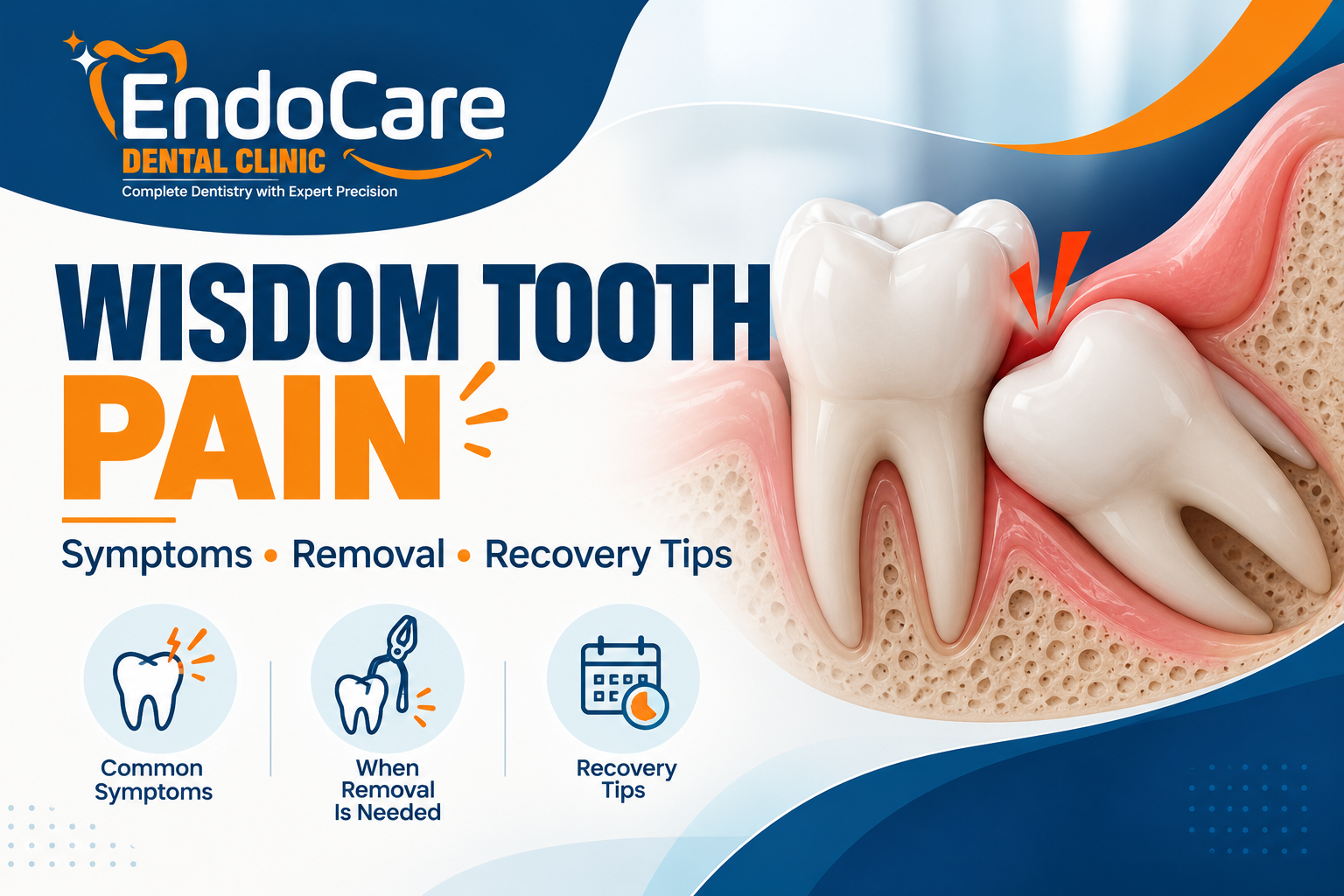
A wisdom tooth may emerge partially, remain trapped beneath the gums or grow at an angle against the neighbouring tooth. These situations can make cleaning difficult and may increase the risk of gum infection, tooth decay and other complications.
If you are experiencing wisdom tooth pain in Viman Nagar, Pune, understanding the cause can help you decide when to seek dental care.
At EndoCare Dental Clinic, patients can seek an assessment of dental pain and discuss appropriate treatment options based on their clinical findings.
This guide explains common wisdom tooth symptoms, when removal may be recommended, what happens during extraction and how to care for the area afterward.
In This Article
-
What is a wisdom tooth?
-
Common symptoms of wisdom tooth problems
-
Why does a wisdom tooth hurt?
-
When should a wisdom tooth be removed?
-
What happens during wisdom tooth removal?
-
Recovery after wisdom tooth extraction
-
When is wisdom tooth pain an emergency?
-
Frequently asked questions
1. What Is a Wisdom Tooth?
Wisdom teeth are the third molars located at the very back of the mouth. Most adults can develop up to four wisdom teeth, although some people develop fewer or none.
These teeth generally emerge between the late teenage years and the mid-twenties, but the timing varies.
When there is enough space and a wisdom tooth emerges in a healthy position, it may not require removal.
Problems can occur when the tooth does not have sufficient room to erupt, remains partly covered by gum tissue or develops in an unfavourable position.
A dental examination helps determine whether the tooth can be maintained with appropriate oral hygiene or whether treatment is necessary.
2. Common Symptoms of Wisdom Tooth Problems
Wisdom tooth problems can range from mild gum irritation to significant pain and infection.
Watch for the following symptoms.
A. Pain at the Back of the Mouth
Discomfort near the last molar is a common reason people seek advice about wisdom teeth.
The pain may be intermittent or persistent and may worsen while chewing. However, pain in this area can also result from decay, gum disease or problems involving neighbouring teeth.
A dental examination is necessary to identify the actual cause.
B. Swollen or Tender Gums
When a wisdom tooth emerges only partially, a flap of gum tissue may remain over part of the tooth.
Food particles and bacteria can collect beneath this flap, causing inflammation and a condition called pericoronitis.
Symptoms can include redness, tenderness, swelling and an unpleasant taste.
C. Difficulty Opening Your Mouth
Inflammation around a wisdom tooth can sometimes make opening the mouth uncomfortable or difficult.
If restricted mouth opening is accompanied by worsening pain, facial swelling or fever, seek urgent dental assessment.
D. Bad Breath or an Unpleasant Taste
Food and bacteria trapped around a partially erupted wisdom tooth can contribute to bad breath or an unpleasant taste.
Persistent symptoms should be evaluated, particularly when accompanied by swelling, pus or pain.
E. Pain While Chewing
A wisdom tooth that is partially erupted, decayed or surrounded by inflamed gum tissue may cause discomfort while chewing.
Pain can also originate from the neighbouring second molar. Your dentist may examine both teeth to determine the source.
F. Swelling Around the Jaw or Cheek
Swelling near the back of the jaw may indicate inflammation or infection.
Facial swelling that increases, spreads or occurs with fever needs prompt assessment. Difficulty swallowing or breathing is an emergency.
Not every wisdom tooth causes symptoms. A dentist may identify a tooth that is impacted or difficult to clean during a routine examination, even if you are not experiencing pain.
3. Why Does a Wisdom Tooth Hurt?
Several factors can cause wisdom tooth pain.
Impacted Wisdom Teeth
An impacted wisdom tooth is unable to erupt fully into its expected position.
It may remain beneath the gum tissue or within the jawbone, or emerge at an angle.
Depending on its position, an impacted tooth may contribute to pain, inflammation, decay or damage to the neighbouring tooth.
Not every impacted wisdom tooth needs removal. The decision depends on symptoms, examination findings, imaging and the risk of future complications.
Pericoronitis: Infection or Inflammation Around a Partially Erupted Tooth
Pericoronitis occurs when the gum tissue around a partially erupted wisdom tooth becomes inflamed, often because bacteria and food debris accumulate beneath the gum flap.
Possible symptoms include:
-
Pain around the back molar.
-
Swollen or tender gum tissue.
-
An unpleasant taste or bad breath.
-
Discomfort while chewing.
-
Difficulty opening the mouth in more significant cases.
Treatment depends on the severity of the condition and the tooth's position. A dentist may recommend cleaning the affected area, managing the infection or considering extraction when clinically appropriate.
Tooth Decay
Wisdom teeth can be difficult to brush and floss because of their position at the back of the mouth.
If plaque accumulates, the wisdom tooth or the adjacent molar may develop decay.
Depending on the extent of damage, treatment may involve a filling, another restorative procedure or extraction.
Learn more about Dental Fillings at EndoCare Dental Clinic.
Pressure on the Neighbouring Tooth
A wisdom tooth that grows at an angle may be difficult to clean and can contribute to decay or damage affecting the neighbouring second molar.
Your dentist may recommend an examination and dental imaging to evaluate the position of both teeth.
Other Causes of Pain
Pain at the back of the mouth does not always originate from a wisdom tooth. Gum inflammation, a cracked tooth, decay in another molar or other oral conditions may produce similar symptoms.
An accurate diagnosis helps avoid unnecessary extraction or treatment of the wrong tooth.
4. When Should a Wisdom Tooth Be Removed?
Wisdom tooth removal may be recommended when the tooth causes symptoms, develops disease or presents a clinically significant risk to the surrounding teeth and tissues.
Your dentist will assess the benefits and risks before recommending extraction.
Removal May Be Recommended When:
1. Recurrent gum infections occur
Repeated episodes of pericoronitis may make removal appropriate, particularly when the tooth is unlikely to erupt into a healthy, cleanable position.
2. The wisdom tooth has extensive decay
If the tooth cannot be predictably restored, extraction may be considered.
3. The neighbouring tooth is at risk
A poorly positioned wisdom tooth may contribute to decay, gum problems or damage affecting the adjacent molar.
4. A cyst or other pathology is identified
Imaging may occasionally reveal a cyst or another abnormality associated with an impacted tooth. Treatment depends on the diagnosis and may involve removal.
5. The tooth cannot be maintained in a healthy condition
A tooth that remains difficult to clean and repeatedly causes problems may need to be removed after a clinical assessment.
Does Every Impacted Wisdom Tooth Need Extraction?
No. A wisdom tooth that is healthy, symptom-free and free of associated disease may sometimes be monitored rather than removed.
Preventive removal of every asymptomatic wisdom tooth is not automatically necessary. Your dentist should explain the findings, potential risks of retaining the tooth and the reasons for recommending either monitoring or removal.
The decision should be individualised rather than based on age alone.
5. What Happens During Wisdom Tooth Removal?
The complexity of wisdom tooth removal depends on whether the tooth has fully erupted, its position and the relationship of its roots to nearby structures.
Step 1: Dental Examination
Your dentist will review your symptoms, examine the affected area and assess the wisdom tooth and neighbouring teeth.
The examination may include checking for gum inflammation, decay, swelling and signs of infection.
Step 2: Dental X-Rays or Other Imaging
Imaging may be used to assess the tooth's position, root anatomy and relationship to surrounding structures.
For selected complex cases, additional imaging may be considered when it is expected to influence treatment planning.
Step 3: Local Anaesthesia
Local anaesthesia is commonly used to numb the area during wisdom tooth removal.
You may feel pressure or movement during the procedure, but the aim is to minimise pain. Tell your dentist if you experience discomfort so it can be addressed.
Step 4: Removal of the Tooth
A fully erupted wisdom tooth may be removed using a straightforward extraction technique.
An impacted tooth may require a surgical approach involving an incision in the gum and, in selected cases, removal of a small amount of surrounding bone or sectioning of the tooth.
The exact procedure depends on the tooth's position and clinical complexity.
Step 5: Aftercare Instructions
Following removal, your dentist will explain how to protect the extraction site, manage discomfort, maintain oral hygiene and recognise signs of complications.
Some patients require stitches, while others do not. The need for stitches depends on the procedure.
6. Recovery After Wisdom Tooth Extraction
Recovery varies according to the complexity of the extraction, your general health and how well the site heals.
Mild discomfort, swelling and limited jaw movement can occur after surgical extraction. Symptoms generally improve gradually, although more complex procedures may take longer to recover from.
First 24 Hours
Follow the instructions provided by your dentist.
-
Bite gently on the gauze for the recommended period if provided.
-
Avoid vigorous rinsing, forceful spitting and disturbing the extraction site.
-
Avoid smoking or vaping, as these can interfere with healing.
-
Choose soft, cool or lukewarm foods that are comfortable to eat.
-
Avoid strenuous activity if advised.
A blood clot forms in the socket and helps protect the healing tissue. Disturbing this clot can increase the risk of a painful complication called dry socket.
Days 2–3
Some swelling and discomfort may remain, and swelling can temporarily increase during the first few days after surgery.
Follow your dentist's instructions about pain relief, oral hygiene and any prescribed medication.
After the initial 24 hours, gentle warm saltwater rinses may be recommended, provided they are performed without force and in accordance with your dentist's advice.
Days 4–7
Discomfort and swelling should generally begin improving. Continue to keep the mouth clean without traumatising the extraction site.
Follow any instructions about returning for a review or having stitches removed.
When Should You Contact Your Dentist During Recovery?
Contact your dentist promptly if you experience:
-
Pain that becomes significantly worse after initially improving.
-
Persistent or increasing swelling.
-
Fever or pus.
-
Uncontrolled bleeding.
-
Difficulty opening your mouth that is worsening.
-
New or persistent numbness after the expected period of anaesthesia.
Severe swelling that affects swallowing or breathing requires emergency medical care.
7. What Can You Eat After Wisdom Tooth Removal?
Choosing appropriate foods can make recovery more comfortable.
Foods That May Be Easier to Eat
-
Soft rice or khichdi that is not too hot.
-
Mashed potatoes.
-
Soft scrambled eggs.
-
Yogurt without hard pieces.
-
Smooth soups served lukewarm.
-
Soft, well-cooked vegetables.
Choose foods that require minimal chewing, particularly during the first day or two.
Foods and Habits to Avoid Initially
-
Hard, crunchy or sharp foods.
-
Very hot foods and drinks while the area is numb or bleeding.
-
Foods that easily lodge in the extraction site.
-
Straws if your dentist advises avoiding suction.
-
Smoking or vaping.
-
Alcohol during the initial recovery period and while taking medicines that may interact with it.
Resume your usual diet gradually as comfort improves and according to your dentist's instructions.
Do not probe the extraction socket with your fingers, tongue or sharp objects to remove food.
8. Is Wisdom Tooth Removal Painful?
The procedure is performed with appropriate anaesthesia to reduce pain during extraction.
You may experience pressure during removal and some soreness, swelling or jaw stiffness afterward. These effects vary with the complexity of the procedure.
Your dentist can recommend suitable pain relief based on your medical history, other medications and the procedure performed.
If pain becomes severe, increases after initially improving or is accompanied by other warning signs, arrange a dental review rather than assuming it is normal healing.
9. Wisdom Tooth Pain: When Is It an Emergency?
Some wisdom tooth problems can be managed with a planned dental appointment, while others require urgent attention.
Seek urgent dental assessment if you experience significant or worsening pain, pus, fever, facial swelling or increasing difficulty opening your mouth.
Seek emergency medical care immediately if you have:
-
Difficulty breathing or swallowing.
-
Rapidly spreading swelling of the face, mouth or neck.
-
Swelling that affects the tongue or floor of the mouth.
-
Severe illness associated with spreading oral swelling.
Do not attempt to drain an abscess yourself or rely on leftover antibiotics. Prompt assessment helps determine the source of the problem and the treatment required.
10. Wisdom Tooth Removal in Viman Nagar, Pune at EndoCare Dental Clinic
If you are searching for wisdom tooth pain treatment in Viman Nagar, Pune, an appropriate dental examination is the first step towards understanding the cause of your symptoms.
At EndoCare Dental Clinic, patients can seek an assessment of dental pain and discuss suitable treatment options based on their individual clinical findings.
Your consultation may involve:
-
Reviewing the location, duration and severity of your symptoms.
-
Examining the wisdom tooth and adjacent teeth.
-
Checking for gum inflammation, decay or signs of infection.
-
Reviewing dental imaging when indicated.
-
Discussing whether monitoring, treatment or removal may be appropriate.
The treatment plan depends on the tooth's position, the presence of disease, the complexity of removal and your overall dental health.
EndoCare Dental Clinic is located in Viman Nagar, Pune, and serves patients from nearby areas, including Kharadi, Kalyani Nagar, Wadgaon Sheri and Dhanori.
If you have persistent wisdom tooth pain, swollen gums or difficulty chewing, arrange an assessment rather than delaying care until symptoms become severe.
EndoCare Dental Clinic
Location: Viman Nagar, Pune
Phone: +91 90968 82602
Hours: All seven days, 10:00 AM–9:00 PM
Website: EndoCare Dental Clinic
Frequently Asked Questions About Wisdom Tooth Pain and Removal
1. At what age do wisdom teeth usually appear?
Wisdom teeth commonly emerge between the late teenage years and the mid-twenties, although timing varies. Some people develop them earlier, later or not at all.
2. How do I know if my wisdom tooth is impacted?
An impacted wisdom tooth may cause pain, swollen gums, difficulty cleaning the area or recurrent infection. However, some impacted teeth cause no symptoms. A dental examination and appropriate imaging can establish the tooth's position.
3. Does every painful wisdom tooth need to be removed?
Not always. Treatment depends on the cause of pain, the tooth's position and whether disease is present. Some problems can be managed without immediate extraction, while recurrent infection, significant decay or other complications may make removal appropriate.
4. How long does wisdom tooth removal recovery take?
Recovery varies. Mild discomfort may settle within a few days, while swelling and soreness after surgical extraction can last longer. Healing of the extraction socket continues over several weeks. Follow your dentist's advice and seek a review if symptoms worsen rather than improve.
5. Can I go to work after wisdom tooth removal?
Some people can return to routine activities the next day after a straightforward extraction. Surgical removal may require more rest. Your recovery depends on the procedure, discomfort, swelling and whether sedation was used. Follow your dentist's advice, particularly before driving or undertaking strenuous activity.
6. What should I eat after wisdom tooth extraction?
Soft foods such as khichdi, yogurt, mashed potatoes and lukewarm soups may be comfortable initially. Avoid hard, crunchy foods and anything that irritates the socket. Gradually resume your usual diet as healing progresses.
7. Can wisdom tooth pain go away without removal?
Symptoms may settle temporarily, especially when inflammation reduces. However, recurring pain can indicate an unresolved problem. A dental assessment helps determine whether the tooth can be maintained or whether definitive treatment is needed.
8. Is wisdom tooth extraction a major procedure?
It depends on the tooth. A fully erupted tooth may be straightforward to remove, while a deeply impacted tooth may require surgical extraction. Your dentist can explain the expected complexity after examining the tooth and reviewing appropriate imaging.
9. Can a wisdom tooth damage the neighbouring molar?
A poorly positioned wisdom tooth can contribute to food trapping, decay or damage affecting the adjacent second molar. Examination and imaging can help determine whether the neighbouring tooth is at risk.
10. Where can I get a wisdom tooth assessed in Viman Nagar, Pune?
You can contact EndoCare Dental Clinic in Viman Nagar to discuss your symptoms and arrange a dental consultation. Call +91 90968 82602 or visit EndoCare's website.
Conclusion: Do Not Ignore Persistent Wisdom Tooth Pain
Wisdom tooth pain can result from impaction, gum inflammation, decay or problems affecting the neighbouring molar. Although not every wisdom tooth needs removal, persistent symptoms and recurrent infection deserve professional attention.
Early assessment can help identify the cause, explain the available options and determine whether monitoring, treatment or extraction is appropriate.
If you are experiencing wisdom tooth pain and looking for dental care in Viman Nagar, Pune, contact EndoCare Dental Clinic for an assessment and personalised treatment guidance.
EndoCare Dental Clinic — Complete dentistry with expert precision.
Medical disclaimer: This article is intended for general educational purposes and does not replace an individual dental examination or diagnosis. Treatment decisions should be made with a qualified dental professional.
This article is general information from the EndoCare Dental Clinic team. It is not a diagnosis or a substitute for an examination by your dentist. Please consult a dentist for advice about your own teeth.