Temporary Dental Crown Care in Viman Nagar, Pune
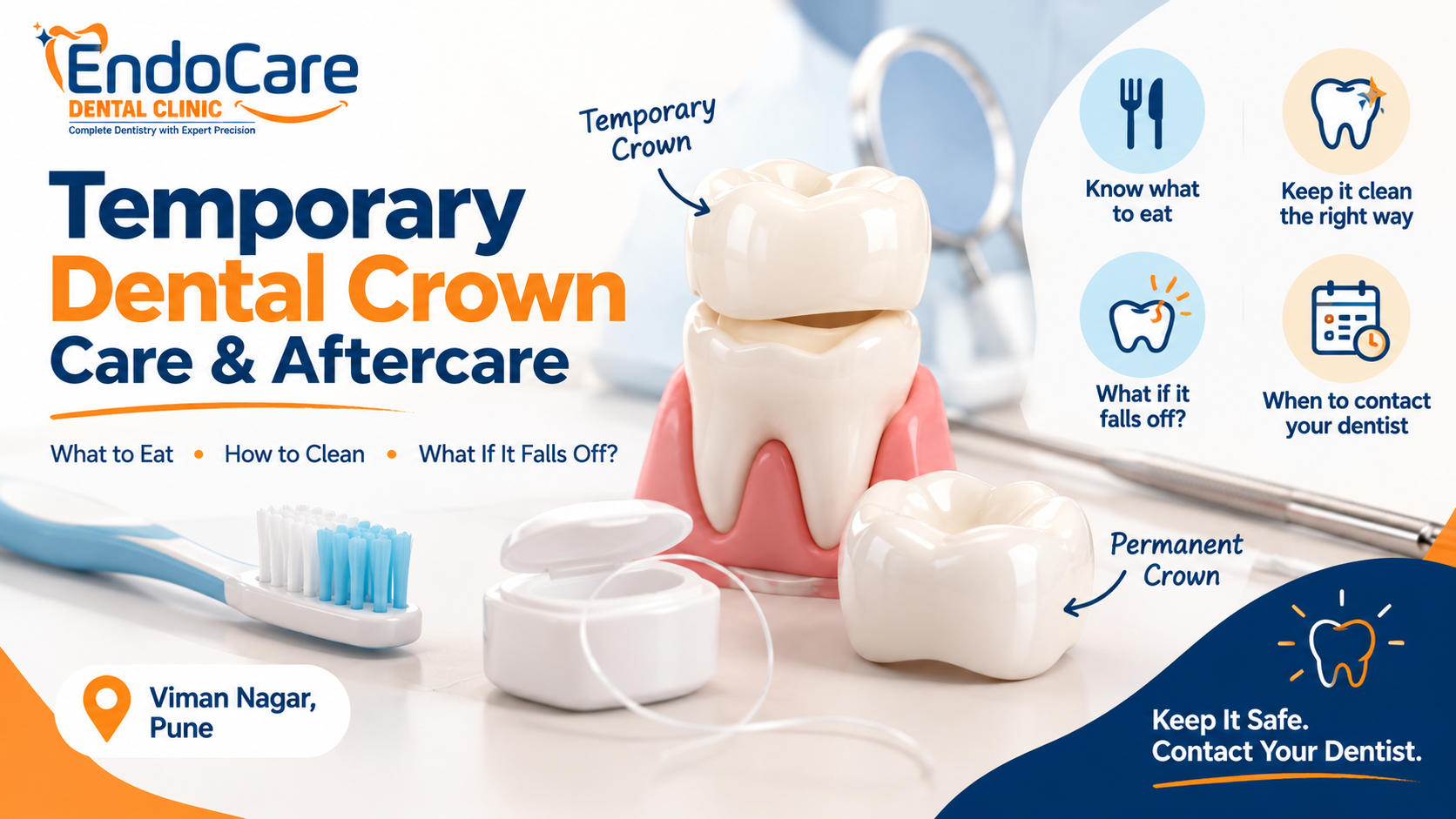
Temporary Dental Crown in Viman Nagar, Pune: How to Care for It and What to Do If It Falls Off
Have you recently received a temporary dental crown and been told to return for your permanent crown? You may be wondering what you can eat, how carefully you need to brush and whether the temporary crown can come loose before your next appointment.
A temporary crown is an important part of many dental restoration procedures. It protects the prepared tooth while the permanent restoration is being made or while your dentist completes the planned treatment.
Although temporary crowns are designed for short-term use, they still require careful handling. Hard or sticky foods, certain cleaning techniques and accidental biting forces can loosen or damage them.
If you are looking for dental crown treatment in Viman Nagar, Pune, understanding how to care for your temporary crown can help you protect the treated tooth while you wait for your next appointment.
At EndoCare Dental Clinic, we believe that good dental care includes clear aftercare instructions. This guide explains how temporary crowns work, what to eat, how to clean your teeth and what to do if your crown becomes loose or falls off.
In This Article
- What is a temporary dental crown?
- Why do dentists place temporary crowns?
- How to care for a temporary dental crown.
- Foods to avoid while wearing a temporary crown.
- How to brush and floss around a temporary crown.
- What to do if your temporary crown falls off.
- When to contact your dentist.
- Frequently asked questions about temporary crowns.
What Is a Temporary Dental Crown?
A dental crown is a restoration that covers a tooth to help restore its shape, function and appearance.
A temporary dental crown is a short-term covering placed over a prepared tooth while the permanent crown is being made or before the next stage of treatment.
Temporary crowns are generally secured with temporary cement, which allows the dentist to remove the crown when it is time to fit the final restoration.
They may be used when a tooth has undergone substantial preparation for a crown, including in selected cases following root canal treatment.
A temporary crown is not intended to replace the permanent restoration indefinitely. Its purpose and expected duration depend on your treatment plan.
If your dentist has placed a temporary crown, follow the specific instructions provided for your tooth and restoration.
Why Do Dentists Place Temporary Crowns?
Temporary crowns serve several purposes during dental treatment.
1. To protect the prepared tooth
When a tooth is prepared for a crown, some of its outer structure may be reshaped. A temporary crown helps cover the prepared tooth while you wait for the permanent restoration.
Without adequate protection, the tooth may become sensitive to temperature, pressure or food.
2. To help maintain comfort
The temporary restoration covers the prepared tooth and may reduce discomfort caused by exposure to the oral environment.
However, some sensitivity or tenderness can still occur after dental treatment. Persistent, severe or worsening pain should be assessed rather than assumed to be normal.
3. To maintain appearance
When a visible front tooth is being restored, a temporary crown can help maintain its appearance while the permanent crown is being fabricated.
The final restoration may differ slightly in shape, shade and fit.
4. To provide temporary function
A temporary crown can allow you to use the tooth during the interim period, subject to your dentist's instructions.
However, it may not be as strong or securely retained as the final restoration. Avoid placing unnecessary stress on it.
If you want to understand when a crown may be recommended, read our existing guide: Dental Crown or Filling in Viman Nagar, Pune.
How to Care for a Temporary Dental Crown
Caring for a temporary crown involves protecting it from excessive biting forces while keeping the surrounding tooth and gums clean.
1. Avoid chewing hard foods on the crowned tooth
Temporary crowns may be more vulnerable to damage or loosening than the final restoration.
Avoid biting directly into particularly hard foods using the crowned tooth. If your dentist has advised you to avoid chewing on that side, follow those instructions.
Where appropriate, chew on the opposite side of your mouth until the permanent crown is fitted.
2. Be careful with sticky foods
Sticky foods can pull on a temporary crown and potentially loosen it.
During the temporary-crown period, avoid or minimise foods such as:
- Chewy toffees and caramels.
- Sticky sweets and chewing gum.
- Very chewy foods that require considerable biting force.
- Hard candies and ice.
- Hard nuts or foods that put excessive pressure on the crown.
The precise restrictions depend on the tooth and the type of temporary restoration. Your dentist may recommend additional precautions.
3. Choose comfortable foods
You do not necessarily need to follow a liquid diet while wearing a temporary crown.
Many patients can eat normally with some adjustments, provided they avoid stressing the restoration.
Suitable options may include:
- Soft rice dishes.
- Well-cooked vegetables.
- Eggs.
- Soft bread cut into manageable pieces.
- Pasta.
- Soft-cooked fish.
- Other foods that require relatively little chewing.
Choose foods according to your comfort and any instructions provided after the procedure.
If chewing causes pain, avoid forcing yourself to eat on that side and contact your dentist if the discomfort persists.
4. Be cautious with very hot or cold foods if the tooth is sensitive
Some teeth may be temporarily sensitive after preparation for a crown.
If very hot or cold food triggers discomfort, choose foods and drinks at a comfortable temperature until the tooth is assessed or the sensitivity settles.
Persistent sensitivity, worsening pain or pain that interferes with eating warrants dental advice.
5. Attend your appointment for the permanent crown
Temporary crowns are intended to serve during an interim stage of treatment.
Do not postpone the permanent-crown appointment indefinitely simply because the temporary crown feels comfortable.
Your dentist will assess the tooth, confirm that the final restoration is appropriate and check the fit and bite when placing it.
If you cannot attend your scheduled appointment, contact the clinic to discuss an alternative date.
How to Brush and Floss Around a Temporary Crown
Maintaining oral hygiene is important while wearing a temporary crown. Neglecting the area can allow plaque to accumulate around the crown and gumline.
However, cleaning should be performed carefully to avoid dislodging the temporary restoration.
Brushing your teeth
Brush twice daily using a soft-bristled toothbrush and fluoride toothpaste, unless your dentist has provided different instructions.
Clean the temporary crown and surrounding gumline gently.
Avoid aggressive scrubbing or pressing excessively against the crown.
If the area is tender after treatment, use gentle movements while still keeping the teeth clean.
Flossing around the crown
Flossing can help remove plaque and food debris between teeth, but the technique matters when a temporary crown is present.
Where your dentist has advised you to floss around the crown, clean carefully rather than snapping the floss forcefully into the gums.
When removing floss from around a temporary crown, sliding it out sideways may help reduce the risk of pulling the crown upwards.
If your dentist has given you a different technique because of your particular restoration, follow that advice.
What if food keeps getting trapped around the crown?
Repeated food trapping, discomfort or a feeling that the crown is not fitting correctly should be discussed with your dentist.
Do not use pins, needles or other sharp objects to remove food around the restoration.
Your dentist can assess the fit, the contact between neighbouring teeth and the condition of the surrounding gums.
What Should You Do If Your Temporary Dental Crown Falls Off?
A temporary crown can occasionally loosen or come off before the permanent restoration is fitted.
If this happens, try not to panic. The important steps are to protect the tooth and arrange appropriate dental advice.
Step 1: Find the crown and keep it safe
If the crown has come out of your mouth, retrieve it if possible.
Rinse it gently with water if needed, without scraping or damaging its inner surface, and place it in a clean container.
Bring it to your dental appointment so the dentist can assess whether it is intact and whether it can be reused.
Step 2: Contact your dentist promptly
Contact the dentist who placed the temporary crown and explain what happened.
Tell the clinic whether the crown is intact, whether you have pain or sensitivity, and when your permanent crown appointment is scheduled.
Your dentist can advise how soon you need to be seen.
Do not assume that a crown that has fallen off can safely remain off until a much later appointment.
Step 3: Protect the exposed tooth
While waiting for professional advice:
- Avoid chewing on the affected tooth.
- Choose soft foods if chewing is uncomfortable.
- Avoid very hot or cold foods if the tooth is sensitive.
- Brush gently around the area.
- Keep the tooth and surrounding gums clean.
- Avoid sticky foods that could pull on the remaining restoration or irritate the area.
The prepared tooth may be more sensitive or vulnerable without its temporary covering.
Step 4: Do not use household glue
Never use superglue, craft glue or other household adhesives to reattach a temporary dental crown.
These products are not designed for use inside the mouth and may damage tissues or complicate professional treatment.
Do not force the crown back onto the tooth or attempt to modify its inner surface.
Use temporary dental cement or another product only if your treating dentist specifically advises you on whether it is appropriate and how to use it.
Step 5: Know when the situation needs urgent attention
Contact your dentist promptly if the crown comes off, particularly if the tooth is painful or very sensitive.
Seek urgent dental assessment if you develop significant or worsening pain, swelling, discharge or other concerning symptoms.
If you think you have inhaled the crown, or you develop choking, breathing difficulty or other signs of airway obstruction, seek emergency medical care immediately.
If the crown has been swallowed, contact a healthcare professional for advice, particularly if you develop pain, coughing, breathing difficulty or other symptoms.
The appropriate response depends on your symptoms and circumstances.
Can You Eat Normally With a Temporary Crown?
In many cases, you can continue eating while wearing a temporary crown, but some changes may be necessary.
The main concern is avoiding food that could damage or dislodge the restoration.
Foods to avoid or limit
Until your dentist fits the permanent crown, be cautious with:
- Sticky sweets and chewing gum.
- Hard candies and ice.
- Very hard or crunchy foods.
- Foods that require forceful biting directly on the crowned tooth.
- Chewy foods that pull against the restoration.
If a particular food causes discomfort or makes the crown feel loose, stop chewing it and seek advice.
What about tea, coffee and other drinks?
Tea and coffee do not automatically need to be avoided because you have a temporary crown.
However, if the prepared tooth is sensitive, very hot or cold drinks may cause discomfort.
Follow your dentist's instructions, particularly if you have undergone additional treatment.
How Long Can You Wear a Temporary Dental Crown?
Temporary crowns are designed for short-term use, but the exact duration varies.
The time depends on factors such as:
- The type of temporary restoration.
- The condition of the tooth.
- The treatment being performed.
- Whether further procedures are needed.
- The laboratory schedule for the permanent crown.
- Your dentist's assessment of the tooth and restoration.
Your dentist will tell you when the permanent crown should be fitted.
Do not rely on a general online timeframe as a substitute for your own treatment schedule.
If your temporary crown has become loose, cracked or uncomfortable, contact your dentist rather than waiting for the planned appointment.
What Happens When the Permanent Crown Is Fitted?
When your permanent crown is ready, your dentist will assess the tooth and the restoration before fitting it.
The process may include:
- Removing the temporary crown.
- Cleaning and examining the prepared tooth.
- Checking the fit of the permanent crown.
- Assessing its shape, appearance and contact with neighbouring teeth.
- Checking your bite.
- Securing the restoration using the appropriate cement or attachment method.
- Providing instructions for ongoing care.
You may need a minor adjustment if the bite feels uneven.
Once the permanent crown is fitted, you should continue brushing twice daily, cleaning between your teeth and attending dental reviews as recommended.
A permanent crown still requires good oral hygiene. Although the crown itself cannot develop conventional tooth decay, the underlying tooth and surrounding gum tissue can still develop problems.
For more information about restorative treatment, explore Crowns and Bridges in Viman Nagar, Pune.
Temporary Dental Crowns at EndoCare Dental Clinic, Viman Nagar, Pune
If you have a temporary crown that feels loose, has fallen off or is causing discomfort, a dental assessment can help determine the appropriate next step.
At EndoCare Dental Clinic in Viman Nagar, Pune, crown treatment is planned according to the condition of the tooth, the amount of remaining tooth structure and the restoration required.
A crown may also be recommended after root canal treatment when the tooth needs additional protection. However, not every root canal-treated tooth automatically requires the same restoration; the decision depends on the tooth's condition and clinical findings.
You can read more about Root Canal Treatment in Viman Nagar, Pune if your temporary crown was placed as part of root canal treatment.
The clinic serves patients in Viman Nagar and nearby areas, including Kharadi, Kalyani Nagar, Wadgaon Sheri and Dhanori.
Need Advice About a Temporary Crown?
EndoCare Dental Clinic — Complete Dentistry with Expert Precision
- Location: Viman Nagar, Pune
- Phone: +91 90968 82602
- Hours: Open all seven days, 10:00 AM–9:00 PM
If your temporary crown has come off or is causing pain, contact the clinic to discuss your symptoms and arrange an assessment.
Book your appointment: EndoCare Dental Clinic Contact Page
Frequently Asked Questions About Temporary Dental Crowns
1. What should I do if my temporary dental crown falls off?
Keep the crown in a clean container if you can retrieve it, avoid chewing on the affected tooth and contact your dentist promptly. Do not use household glue or force the crown back into position.
2. Can I brush my teeth with a temporary crown?
Yes, unless your dentist has given different instructions. Brush gently twice daily with a soft-bristled toothbrush and fluoride toothpaste, paying attention to the gumline around the temporary crown.
3. Can I floss around a temporary dental crown?
You may be able to floss around it, but use the technique recommended by your dentist. Avoid pulling floss forcefully upwards against the crown; sliding it out sideways may help reduce the risk of dislodging the restoration.
4. What foods should I avoid with a temporary crown?
Avoid sticky sweets, chewing gum, hard candies, ice and foods that place excessive force on the temporary crown. Your dentist may recommend additional restrictions depending on the tooth and treatment.
5. Is sensitivity normal after receiving a temporary crown?
Some temporary sensitivity or tenderness can occur after tooth preparation. However, severe, persistent or worsening pain, swelling or other concerning symptoms should be assessed by your dentist.
6. Can I put my temporary crown back myself?
Do not force it back into place or use household adhesives. Contact your dentist for advice. If a temporary dental product is being considered, use it only when your treating dentist specifically recommends it and explains how to use it safely.
7. How long can I wait if my temporary crown falls off?
Contact your dentist promptly for advice on timing. The urgency depends on the tooth, symptoms and stage of treatment. Do not assume it is safe to leave the prepared tooth uncovered for an extended period.
8. Where can I get dental crown treatment in Viman Nagar, Pune?
You can contact EndoCare Dental Clinic at +91 90968 82602 or visit the clinic's contact page to arrange an appointment. The clinic is open all seven days from 10:00 AM to 9:00 PM.
Conclusion: Protect Your Temporary Crown Until Your Final Restoration
A temporary dental crown helps protect a prepared tooth while you wait for the permanent restoration. Taking care when eating, maintaining gentle oral hygiene and following your dentist's instructions can help reduce the risk of complications.
If your crown becomes loose or falls off, keep it safe if possible, protect the exposed tooth and contact your dentist promptly. Avoid household adhesives and do not attempt to force the crown back into place.
If you need advice about a temporary crown or dental crown treatment in Viman Nagar, Pune, EndoCare Dental Clinic can help you arrange an assessment and understand the next steps in your treatment.
EndoCare Dental Clinic — Complete Dentistry with Expert Precision.
Call +91 90968 82602 to arrange your dental consultation.
Medical disclaimer: This article provides general educational information and does not replace an individual dental examination or professional advice. Follow the specific instructions provided by your treating dentist.
This article is general information from the EndoCare Dental Clinic team. It is not a diagnosis or a substitute for an examination by your dentist. Please consult a dentist for advice about your own teeth.