Sports Mouthguards: Protect Your Teeth | EndoCare Dental Clinic Pune
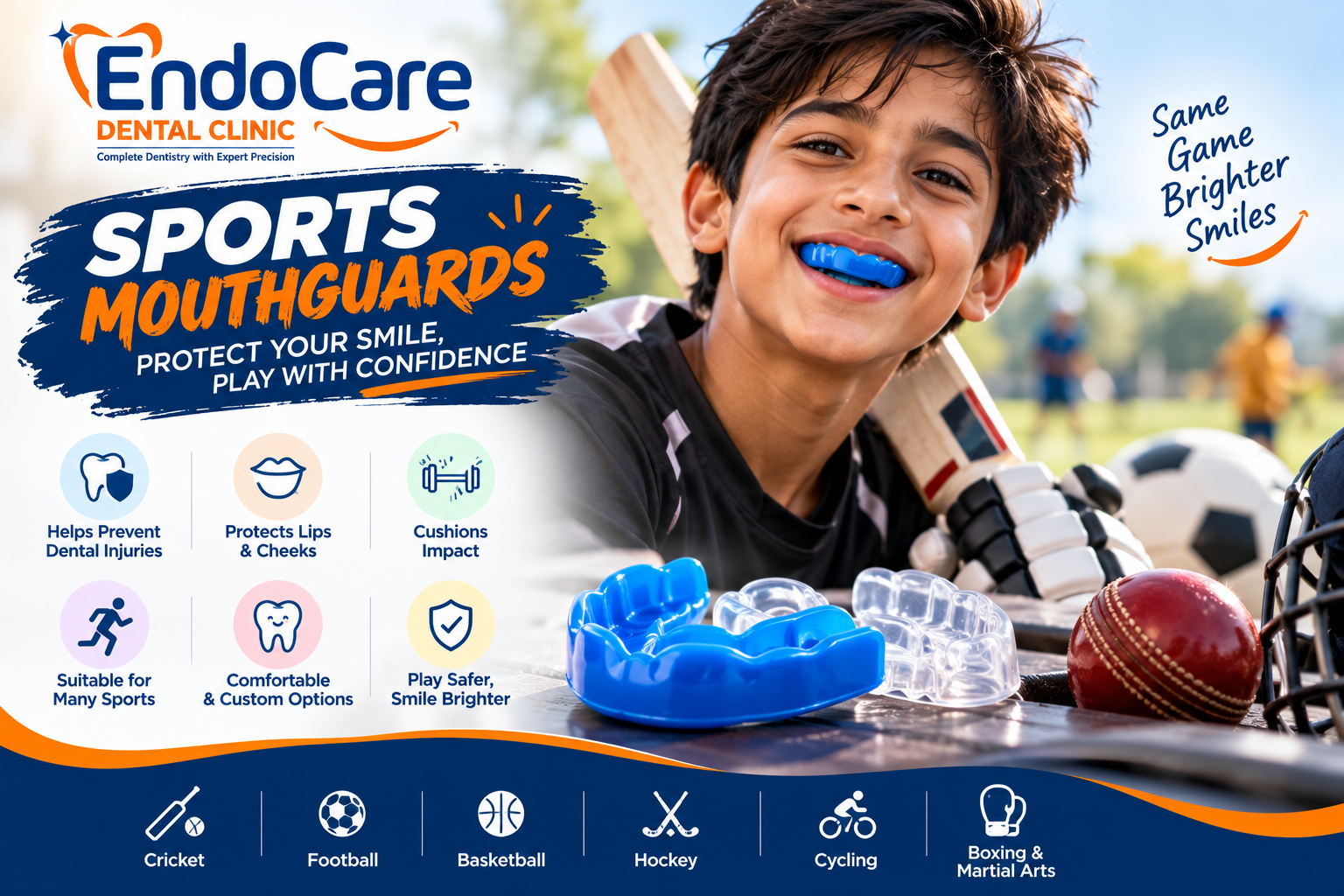
Sports Mouthguards: How to Protect Your Teeth During Cricket, Football and Other Sports
A fast-moving cricket ball, an accidental elbow during football or a fall while cycling can injure more than your skin. An impact to the mouth can chip a tooth, damage the lips and cheeks, or cause a tooth to become loose or get knocked out.
One important piece of protective equipment is a sports mouthguard. It fits over the teeth and helps absorb and distribute impact forces, reducing the risk and severity of many sports-related dental injuries. No mouthguard can prevent every injury, but a properly fitted one is an important precaution for activities with a risk of impact to the face.
Whether you play cricket recreationally, participate in school sports, train at a gym or compete in contact sports, this guide explains when a mouthguard may be useful, the different types available and how to care for one.
In This Article
-
What is a sports mouthguard?
-
Which sports may require a mouthguard?
-
Types of sports mouthguards
-
Choosing a mouthguard for braces or aligners
-
How to care for a mouthguard
-
What to do after a sports-related dental injury
-
Frequently asked questions
What Is a Sports Mouthguard?
A sports mouthguard is a protective appliance worn over the teeth during activities where an impact to the mouth is possible.
It provides a cushioning barrier over the teeth and can also help protect the lips and inner cheeks from contact with the teeth during an impact.
The American Dental Association recommends properly fitted mouthguards for sports and recreational activities with a significant risk of dental or facial injury.
What injuries can a mouthguard help reduce?
Depending on its fit and the nature of the impact, a mouthguard can help reduce the risk or severity of injuries such as:
-
Chipped or fractured teeth.
-
Certain injuries that displace teeth.
-
Cuts to the lips and cheeks caused by contact with the teeth.
-
Some other sports-related injuries involving the teeth and surrounding oral tissues.
A mouthguard does not eliminate all risk. Helmets, face shields and other sport-specific protective equipment may also be important.
It should not be relied upon as a guarantee against concussion or other head injuries. Evidence about concussion prevention from mouthguards is less consistent than the evidence supporting their role in reducing dental and orofacial injuries.
Which Sports May Require a Mouthguard?
The need for oral protection depends on the type of activity, the likelihood of contact, the speed of moving equipment and the risk of falling or receiving an impact to the face.
Cricket
Cricket can involve high-speed balls, collisions and accidental impacts from bats or other equipment. Players in positions such as batting and wicketkeeping may have particular reasons to discuss dental protection with a dental professional and follow the sport's applicable safety guidance.
Football and rugby
Physical contact, collisions and accidental impacts can injure teeth and soft tissues. A properly fitted mouthguard is an important precaution during training and matches.
Basketball and hockey
Player collisions, elbows, sticks and fast-moving balls or pucks can pose a risk to the mouth. Mouthguards are commonly recommended for activities with these injury risks.
Boxing and martial arts
Direct facial impacts make oral protection especially important. Follow the sport's governing-body requirements and use an appropriate mouthguard.
Cycling, skating and other activities with a fall risk
Even activities that are not traditionally considered contact sports can involve falls or facial impacts. Consider the risks of the activity and the protective equipment recommended for it.
The ADA lists a range of contact, collision and other sports in which mouthguard use is recommended. The appropriate protection depends on the activity and its specific risks.
Types of Sports Mouthguards
Sports mouthguards generally fall into three broad categories. They differ in fit, adjustability, comfort and how well they stay in place.
1. Stock or ready-made mouthguards
These mouthguards are sold in preformed sizes and are used as supplied.
Potential advantage: They are readily available and do not require individual fabrication.
Limitations: Because they are not shaped to an individual's teeth, fit and retention can be less reliable. A mouthguard that moves around or needs to be held in place with the jaw may be unsuitable for effective protection.
2. Boil-and-bite mouthguards
These mouthguards are softened in hot water and moulded to the teeth according to the manufacturer's instructions.
Potential advantage: They can adapt more closely to the user's mouth than a generic stock guard when fitted correctly.
Limitations: Fit depends on the product, the user's teeth and how carefully the instructions are followed. Poor moulding can leave the appliance loose, uncomfortable or inadequately retained.
If you wear braces or have other orthodontic appliances, ask your orthodontist or dentist before using or moulding a boil-and-bite guard. Some designs may not be appropriate for your appliance.
3. Custom-made mouthguards
A custom mouthguard is made from a model or scan of the individual's teeth by a dental professional or laboratory.
Potential advantages may include:
-
A fit tailored to the person's teeth.
-
Greater control over comfort and retention.
-
The ability to consider specific dental or orthodontic needs.
Custom-made guards require professional assessment and fabrication. They are not necessary for every person, and other properly fitted mouthguards can also be effective when used consistently.
Which type should you choose?
Look for a mouthguard that fits securely, feels comfortable, is easy to clean and does not interfere unnecessarily with breathing or speaking.
A guard that is loose, damaged or difficult to keep in position should be assessed or replaced. Your dentist can help you understand which type may suit your teeth, activity and any existing dental appliances.
Choosing a Mouthguard If You Wear Braces or Aligners
Orthodontic appliances add another consideration when choosing sports protection.
If you wear traditional braces
Brackets and wires can come into contact with the lips and cheeks during an impact. A suitable mouthguard should accommodate the braces without being excessively tight or interfering with the appliance.
Do not assume that every standard mouthguard will fit safely over braces. Ask your orthodontist which type is appropriate and whether the appliance needs to be reviewed as your teeth move.
If you wear clear aligners
Clear aligners are designed to move teeth; they are not sports mouthguards and should not be relied upon to protect your teeth from impact.
Ask your treating orthodontic professional how to manage your aligners during the sport you play and which mouthguard is compatible with your treatment plan.
Do not force an ordinary mouthguard over an aligner or use an appliance that distorts the trays or creates pressure on the teeth.
EndoCare's existing Invisible Aligners & Braces treatment page explains the clinic's orthodontic treatment pathway.
How to Care for Your Sports Mouthguard
A mouthguard should be cleaned, inspected and stored correctly to maintain its condition.
1. Clean it after use
Rinse the mouthguard after each session and clean it according to the manufacturer's instructions. A suitable soft toothbrush and an appropriate cleaning method may be used where recommended.
Do not use harsh chemicals or abrasive products unless the manufacturer specifically advises them.
2. Let it dry and store it safely
Store the mouthguard in a clean, ventilated case. Avoid leaving it loose in a sports bag where it can become contaminated, crushed or damaged.
3. Avoid heat
High temperatures can distort some mouthguard materials and affect the fit. Do not leave it in a hot car or expose it to boiling water unless the manufacturer's instructions specifically require controlled heating during initial moulding.
4. Inspect it regularly
Look for cracks, tears, rough edges, thinning material or changes in fit.
If the mouthguard becomes damaged or no longer stays securely in place, stop relying on it for protection and seek advice about replacement.
5. Check the fit as children grow
Children's teeth and jaws change as they grow. A mouthguard that fitted previously may become loose or unsuitable. Recheck the fit regularly and seek professional guidance when the fit changes.
The British Orthodontic Society also advises regular inspection and appropriate care of sports mouthguards, especially for children who are growing and people wearing braces.
What Should You Do After a Sports-Related Dental Injury?
Even with a mouthguard, injuries can occur. If a tooth is chipped, displaced, loose or knocked out, arrange prompt dental assessment.
If a tooth is chipped or fractured
Avoid biting on the injured tooth and contact a dentist for assessment. The appropriate treatment depends on the extent of the damage and whether the inner tissues of the tooth have been affected.
If a tooth becomes loose or moves out of position
Do not repeatedly push or wiggle it. Seek urgent dental advice because the tooth and its supporting tissues may be injured.
If a permanent tooth is knocked out
This is a dental emergency. Handle the tooth by its crown rather than the root, avoid scrubbing it, and seek immediate professional guidance. If it cannot be safely repositioned, keep it moist in milk or an appropriate tooth-preservation solution while obtaining urgent care. Never reinsert a knocked-out baby tooth.
Read EndoCare's existing guide, Knocked-Out Tooth First Aid, for the immediate steps to take.
If the injury involves severe facial trauma, heavy uncontrolled bleeding, loss of consciousness or difficulty breathing, seek emergency medical care.
When Should You Ask a Dentist About a Mouthguard?
Consider seeking dental advice if:
-
You or your child participates in a sport with a risk of facial impact.
-
Your current mouthguard feels loose, uncomfortable or damaged.
-
You wear braces or aligners and are unsure which guard is appropriate.
-
A child's mouthguard no longer fits as their teeth develop.
-
You have dental restorations or other oral-health concerns that may affect mouthguard selection.
-
You have experienced a sports-related injury to a tooth or the surrounding tissues.
A dental professional can assess your oral health and discuss suitable protective options or referrals where appropriate.
Sports-Related Dental Protection in Viman Nagar, Pune
Protecting your teeth is an important part of sports safety for children, teenagers and adults.
EndoCare Dental Clinic is located in Viman Nagar, Pune, and provides dental care for patients from Viman Nagar and nearby areas, including Kalyani Nagar, Wadgaon Sheri, Kharadi and Dhanori. These are nearby service areas served by the Viman Nagar clinic, not separate EndoCare branches.
If you have questions about a dental injury, orthodontic appliances or oral-health concerns related to sport, contact the clinic to discuss an appropriate consultation.
EndoCare Dental Clinic
Near Datta Mandir Chowk, Parijat Mithai Building, 1st Floor, Sai Apex, Viman Nagar Road, Viman Nagar, Pune, Maharashtra 411014
Phone: +91 90968 82602
Hours: Open all seven days, 10:00 AM–9:00 PM
Contact EndoCare Dental Clinic to arrange an appointment.
Note: Sports mouthguard fabrication is not explicitly listed among EndoCare's current treatment pages. Confirm availability before advertising custom mouthguard fitting as an in-clinic service.
Frequently Asked Questions About Sports Mouthguards
1. Are sports mouthguards necessary for cricket?
Cricket can involve fast-moving balls, collisions and facial impacts. A properly fitted mouthguard may help reduce the risk of dental injury, particularly where the activity presents a meaningful risk to the mouth. Follow the safety guidance for your playing position and competition.
2. Can a mouthguard prevent all dental injuries?
No. Mouthguards help reduce the risk and severity of many sports-related dental injuries, but no appliance can prevent every injury. Helmets, face protection and other sport-specific equipment may also be important.
3. Can I wear a normal mouthguard with braces?
Not every mouthguard is suitable for braces. Ask your orthodontist or dentist to recommend an option that accommodates your brackets and wires and fits securely without damaging the appliance.
4. Are clear aligners a substitute for sports mouthguards?
No. Clear aligners are designed for orthodontic tooth movement, not impact protection. Ask your treating professional how to manage your aligners during sport and which mouthguard is suitable.
5. How often should I replace a sports mouthguard?
Replace it when it becomes damaged, worn, loose or no longer fits correctly. Children may need more frequent fit checks as their teeth and jaws grow. Follow the manufacturer's guidance and seek professional advice when the fit changes.
6. What should I do if a tooth gets knocked out during sport?
Seek immediate dental care. For a knocked-out permanent tooth, handle it by the crown, avoid scrubbing the root, and keep it moist if it cannot be safely repositioned. Do not reinsert a baby tooth.
Protect Your Smile Before the Game Begins
A well-fitted sports mouthguard is a practical part of protecting your teeth during activities that carry a risk of facial impact. Choosing an appropriate design, checking its fit and maintaining it properly can help support safer participation in sport.
If you or your child wears braces, uses aligners or has questions about a sports-related dental injury, seek advice tailored to your circumstances.
For dental consultations in Viman Nagar, Pune, contact EndoCare Dental Clinic.
EndoCare Dental Clinic | Complete Dentistry with Expert Precision
Medical disclaimer: This article provides general educational information and does not replace an individual dental assessment or sports-specific safety advice.
This article is general information from the EndoCare Dental Clinic team. It is not a diagnosis or a substitute for an examination by your dentist. Please consult a dentist for advice about your own teeth.