Sensitive Teeth: Causes & Relief | EndoCare Dental Clinic, Viman Nagar Pune
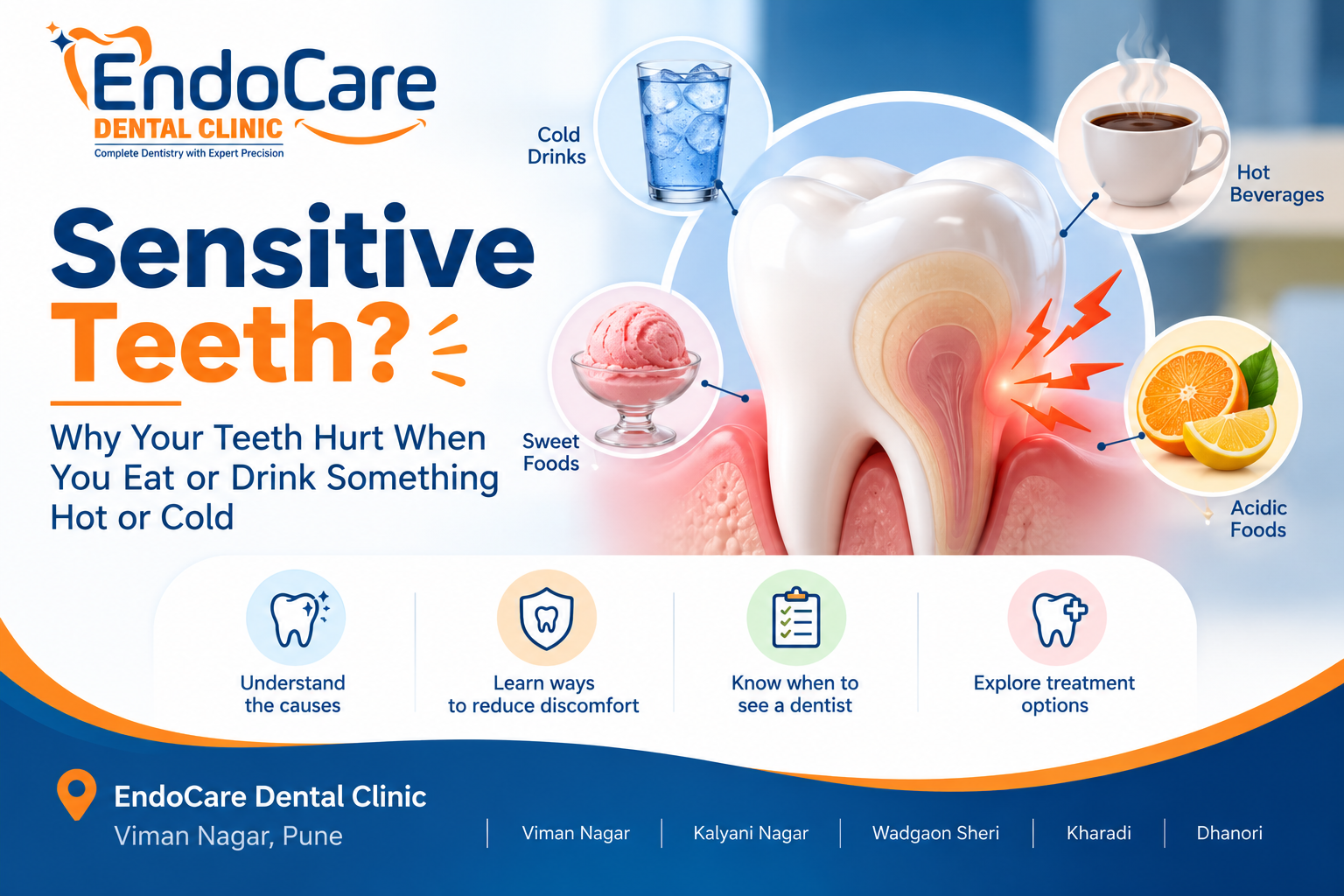
Sensitive Teeth: Why Your Teeth Hurt When You Eat or Drink Something Hot or Cold
Have you ever taken a sip of cold water and felt a sudden, sharp sensation in your teeth? Perhaps hot tea, ice cream, a sweet dessert or even a gentle breath of cold air makes you uncomfortable.
If this sounds familiar, you may be experiencing tooth sensitivity.
Sensitive teeth can make ordinary activities such as drinking your morning tea, enjoying a cold beverage or brushing your teeth uncomfortable. The sensation may last only a moment, or it may linger after the trigger has disappeared.
Occasional sensitivity does not always indicate a serious dental problem. However, repeated, worsening or localised sensitivity should not be ignored because several different dental conditions can produce similar symptoms.
Understanding the possible causes can help you identify common triggers, make appropriate changes to your oral-care routine and recognise when professional assessment is necessary.
At EndoCare Dental Clinic in Viman Nagar, Pune, a dental assessment can help determine the possible cause of sensitivity and the treatment appropriate for your individual condition.
In This Article
-
What is tooth sensitivity?
-
What causes sensitive teeth?
-
Why do hot and cold foods trigger sensitivity?
-
How can you reduce tooth sensitivity at home?
-
Which toothpaste is suitable for sensitive teeth?
-
When should you see a dentist?
-
How is tooth sensitivity treated?
-
Frequently asked questions about sensitive teeth
What Is Tooth Sensitivity?
Tooth sensitivity, sometimes called dentin hypersensitivity, is discomfort triggered by certain external stimuli, such as cold, heat, touch or sweet and acidic foods.
Healthy teeth have protective outer layers. Enamel covers the crown, while cementum covers the root surface. Beneath these layers lies dentin, which contains microscopic channels that communicate with the tissues inside the tooth.
When dentin becomes exposed, stimuli can trigger a short, sharp sensation. This may happen when gums recede, enamel wears away or the protective surface of a tooth becomes damaged.
However, not every sensitive tooth has dentin hypersensitivity. A cavity, cracked tooth, damaged filling or inflammation inside a tooth can also cause pain in response to temperature changes.
That distinction matters because the right treatment depends on the underlying cause.
What Causes Sensitive Teeth?
Several conditions can make your teeth sensitive. The location, duration and triggers of the discomfort can provide useful clues, but symptoms alone cannot establish a diagnosis.
1. Worn Tooth Enamel
Enamel protects the crown of each tooth from everyday wear and temperature changes.
Frequent exposure to acidic foods and drinks, aggressive brushing and other factors can contribute to enamel erosion or wear over time.
As the protective layer becomes thinner or damaged, the underlying dentin may become more exposed, making certain foods and drinks uncomfortable.
To help protect enamel:
-
Brush gently with a soft-bristled toothbrush.
-
Use fluoride toothpaste.
-
Avoid brushing aggressively.
-
Limit frequent exposure to acidic drinks.
-
Rinse with water after consuming acidic foods or beverages.
If you regularly experience sensitivity, ask your dentist whether enamel erosion or another condition could be contributing.
2. Receding Gums
Gum recession occurs when gum tissue moves away from its usual position, exposing more of the tooth root.
Unlike the crown, the root surface does not have an enamel covering. Exposed root dentin can therefore become sensitive to cold, touch and brushing.
Gum recession may be associated with periodontal disease, brushing technique, tooth position or other factors.
If your teeth appear longer than before, or the gumline has changed, arrange a dental assessment. Your dentist can evaluate the gums and advise you on appropriate care.
3. Brushing Too Hard
Brushing vigorously or using a hard-bristled toothbrush may contribute to gum irritation and wear around the tooth surface.
Brushing harder does not necessarily clean your teeth better.
Instead, use gentle pressure and spend sufficient time cleaning all tooth surfaces. If you are unsure about your technique, ask your dentist to demonstrate an appropriate brushing method.
4. Tooth Decay
Dental cavities can cause sensitivity when the protective tooth structure becomes damaged by decay.
Some cavities produce little discomfort initially, while others cause pain when exposed to cold, heat or sweet foods.
A cavity cannot reliably be diagnosed by sensitivity alone. Your dentist may need to examine the tooth and, when indicated, take a dental X-ray.
If decay is responsible, treatment may involve a filling or another restoration depending on the extent of the damage.
5. Cracked or Damaged Teeth
A crack in a tooth can cause discomfort while chewing or when releasing pressure after biting. Some cracks also produce sensitivity to temperature changes.
Cracks may not always be visible to the naked eye.
If one particular tooth hurts when you bite down, or the discomfort is sharp and repeatedly triggered by chewing, arrange a dental examination rather than assuming that you simply have sensitive teeth.
6. Acidic Foods and Drinks
Frequent consumption of acidic beverages and foods can contribute to enamel erosion.
Examples include soft drinks, citrus juices and other acidic products.
You do not necessarily need to eliminate every acidic food from your diet. However, reducing frequent exposure can help protect your teeth.
After consuming acidic food or drinks, rinse your mouth with water. Avoid brushing immediately afterward because acid-softened enamel may be more vulnerable to abrasion. Waiting around 30–60 minutes before brushing is a commonly recommended precaution.
7. Recent Dental Treatment
Some patients experience temporary sensitivity after dental procedures, including fillings, whitening or other restorative treatment.
The expected duration and significance depend on the procedure and the condition of the tooth beforehand.
Mild sensitivity may settle, but severe, persistent or worsening discomfort should be assessed by your dentist.
Do not assume that every symptom after treatment is normal, particularly if pain interferes with eating or sleeping.
Why Do Hot and Cold Foods Trigger Sensitive Teeth?
Temperature changes can trigger discomfort when dentin is exposed or when the tissues inside a tooth are affected.
Cold water, ice cream and chilled beverages are common triggers. Hot tea, coffee or soup may also cause discomfort in some people.
Pay attention to how the pain behaves.
Brief sensitivity: A sharp sensation that stops quickly after the trigger disappears may be consistent with exposed dentin, although other causes are possible.
Lingering temperature pain: Pain that continues after the hot or cold stimulus has been removed can indicate a problem requiring further assessment, including possible inflammation of the dental pulp.
Pain when biting: Discomfort when chewing may be associated with a cracked tooth, a restoration problem or another dental condition.
Spontaneous pain: Pain that starts without an obvious trigger, wakes you at night or repeatedly returns should be evaluated promptly.
These patterns can help your dentist investigate the problem, but none of them can independently confirm a diagnosis.
If sensitivity is repeatedly affecting the same tooth, do not rely on avoiding cold drinks indefinitely. Arrange a dental examination to identify the cause.
How Can You Reduce Tooth Sensitivity at Home?
If your sensitivity is mild and there are no warning signs, several changes may help reduce discomfort while you arrange appropriate dental advice.
1. Use a Soft-Bristled Toothbrush
Choose a soft-bristled toothbrush and brush gently twice daily.
Clean the gumline carefully without scrubbing back and forth aggressively.
If brushing itself causes discomfort, tell your dentist. The sensitivity may be related to exposed roots, gum recession, enamel wear or another condition.
2. Try Toothpaste Designed for Sensitive Teeth
Desensitising toothpastes contain ingredients that can help reduce sensitivity when used regularly.
Their effects are not always immediate. Follow the product instructions and allow time for the recommended routine to work.
If your symptoms persist, a dentist can help determine whether desensitising toothpaste is appropriate or whether another treatment is required.
3. Reduce Exposure to Triggers
Notice which foods and drinks provoke your symptoms.
You may find it helpful to temporarily avoid very cold drinks, extremely hot beverages or particularly acidic foods if they trigger discomfort.
Choose comfortable temperatures and avoid repeatedly testing the painful tooth to see whether the sensitivity has disappeared.
Remember that avoiding triggers can reduce symptoms without correcting the underlying cause.
4. Maintain Good Oral Hygiene
Continue brushing twice daily with fluoride toothpaste and cleaning between your teeth every day.
Avoiding the sensitive area altogether can allow plaque to accumulate and contribute to other dental problems.
If the area is too uncomfortable to clean normally, ask your dentist how to maintain hygiene without aggravating it.
5. Avoid Unverified Home Remedies
Do not apply undiluted essential oils, abrasive powders, acidic substances or household products to sensitive teeth.
Such remedies may irritate oral tissues or damage tooth surfaces.
If a tooth is painful, the safest approach is to identify the cause rather than trying increasingly aggressive home treatments.
Which Toothpaste Is Suitable for Sensitive Teeth?
Desensitising toothpaste may help some people with dentin hypersensitivity.
Different products use different active ingredients, which may work by reducing nerve responses or limiting fluid movement through exposed dentin.
When choosing a toothpaste:
-
Look for a product intended for sensitive teeth.
-
Prefer fluoride toothpaste for routine cavity prevention.
-
Follow the manufacturer's directions.
-
Use the product consistently as instructed.
-
Ask your dentist or pharmacist if you are unsure which formulation is suitable.
Do not assume that a whitening toothpaste is the best choice if your teeth are already sensitive. Some products may aggravate symptoms in certain circumstances.
If sensitivity continues despite regular use, a dental examination is important. A cavity, cracked tooth or inflamed pulp will not necessarily improve with desensitising toothpaste alone.
When Should You See a Dentist for Sensitive Teeth?
Occasional, brief sensitivity may not require emergency treatment, but recurring symptoms deserve attention.
Arrange a dental consultation if:
-
Sensitivity keeps returning or becomes more intense.
-
One particular tooth is consistently affected.
-
Pain lingers after hot or cold food is removed.
-
You experience pain while biting or chewing.
-
You notice a visible cavity, crack or damaged filling.
-
Your gums appear to be receding.
-
Sensitivity continues despite changes to your oral-care routine.
Seek urgent dental advice if you develop severe or worsening pain, facial swelling, fever with dental symptoms or signs of a possible dental abscess.
Difficulty breathing or swallowing, or rapidly spreading facial or neck swelling, requires emergency medical care.
Early assessment can help distinguish ordinary dentin sensitivity from conditions that require restorative or other dental treatment.
How Is Tooth Sensitivity Treated?
Treatment depends on the underlying cause. Your dentist will assess the affected teeth, gums, symptoms and relevant dental history before recommending an approach.
Treatment for Exposed Dentin
When exposed dentin is responsible for the sensitivity, treatment may involve desensitising products, professionally applied agents or other suitable measures to reduce discomfort.
Your dentist can also identify habits that may be contributing to enamel wear or gum recession.
Dental Fillings for Cavities
If tooth decay has created a cavity, a filling may be appropriate when sufficient healthy tooth structure remains.
The choice of restoration depends on the extent and location of the damage.
Learn more about Dental Fillings in Viman Nagar, Pune at EndoCare Dental Clinic.
Treatment for Cracked Teeth
A cracked tooth requires assessment to determine the location and extent of the damage.
Depending on the findings, treatment may involve a restoration or another procedure. The appropriate option cannot be determined from sensitivity symptoms alone.
Root Canal Treatment for Pulp Damage
If the pulp inside the tooth becomes irreversibly inflamed or infected, root canal treatment may be recommended when the tooth can be predictably restored.
Sensitivity alone does not mean that you need a root canal.
The decision depends on the clinical examination and, where appropriate, dental imaging and other diagnostic tests.
Read more about Root Canal Treatment in Viman Nagar, Pune to understand the procedure and when it may be appropriate.
Management of Gum Recession
When exposed roots contribute to sensitivity, your dentist may recommend changes to brushing technique, desensitising products or treatment directed at the underlying gum condition.
The appropriate approach depends on the extent and cause of recession.
The aim is to relieve symptoms while protecting the long-term health of your teeth and gums.
Sensitive Teeth in Viman Nagar, Pune: Getting the Right Assessment
If hot tea, cold water or sweet foods repeatedly cause discomfort, it is worth finding out why rather than simply avoiding the foods you enjoy.
At EndoCare Dental Clinic in Viman Nagar, Pune, a dental consultation can help assess your symptoms and identify the appropriate next steps.
The assessment may involve examining the affected teeth, checking the gums, reviewing your oral-care habits and considering dental X-rays when clinically indicated.
The recommended treatment will depend on the findings. Some patients may benefit from changes to their oral-care routine, while others may need treatment for decay, a damaged restoration, a cracked tooth or another condition.
EndoCare Dental Clinic serves patients from Viman Nagar and nearby areas, including Kalyani Nagar, Wadgaon Sheri, Kharadi and Dhanori. These are nearby service areas, not additional clinic branches.
If tooth sensitivity is persistent, worsening or affecting your daily routine, arrange a consultation to understand the cause and appropriate treatment options.
Frequently Asked Questions About Sensitive Teeth
1. Why are my teeth suddenly sensitive to cold water?
Sudden sensitivity can occur because of exposed dentin, gum recession, enamel wear, a cavity, a cracked tooth or another dental problem. If the sensitivity is persistent, localised or worsening, arrange a dental examination.
2. Can sensitive teeth become normal again?
Some forms of sensitivity can improve with suitable toothpaste, improved brushing technique or treatment of the underlying cause. However, the outcome depends on what is causing the symptoms. Exposed dentin, decay and cracked teeth require different approaches.
3. Does tooth sensitivity always mean I have a cavity?
No. Sensitivity may occur without a cavity, including when dentin becomes exposed because of gum recession or enamel wear. However, decay can also cause sensitivity, so persistent symptoms should be evaluated rather than diagnosed at home.
4. Which toothpaste should I use for sensitive teeth?
A desensitising toothpaste containing an appropriate active ingredient may help when used as directed. Choose a fluoride toothpaste for routine cavity prevention and ask your dentist for advice if symptoms persist or you are unsure which product is suitable.
5. Why do my teeth hurt when I eat ice cream or drink hot tea?
Temperature changes can trigger discomfort when dentin is exposed or when a tooth's inner tissues are affected. The cause cannot be confirmed by the trigger alone. Repeated sensitivity, particularly in one tooth, should be assessed.
6. Can I treat sensitive teeth at home without visiting a dentist?
Mild sensitivity may improve with gentle brushing, fluoride toothpaste, desensitising toothpaste and reduced exposure to triggers. However, home care cannot reliably treat a cavity, cracked tooth or inflamed pulp. Seek professional advice if symptoms persist, worsen or are accompanied by other warning signs.
7. When should I see a dentist for tooth sensitivity in Viman Nagar, Pune?
Arrange an appointment if sensitivity repeatedly returns, lingers after a trigger, affects one tooth or causes pain while biting. Severe pain, swelling or fever with dental symptoms requires urgent assessment. Breathing or swallowing difficulty requires emergency medical care.
Take the First Step Towards More Comfortable Teeth
Sensitive teeth can make everyday eating and drinking uncomfortable, but the right approach begins with identifying the cause.
Use a gentle brushing technique, maintain daily oral hygiene and consider desensitising toothpaste if appropriate. Do not ignore persistent pain or assume that every sensitive tooth needs the same treatment.
If you are experiencing recurring tooth sensitivity, pain while eating or drinking, or discomfort that does not improve, contact EndoCare Dental Clinic in Viman Nagar, Pune to arrange a dental consultation.
EndoCare Dental Clinic | Advanced Dentistry & Root Canal Specialist in Viman Nagar, Pune
-
Phone: +91 90968 82602
-
Hours: Open all seven days, 10:00 AM–9:00 PM
-
Appointments: Contact EndoCare Dental Clinic
Medical disclaimer: This article is for general educational purposes and does not replace an individual dental examination, diagnosis or treatment recommendation.
This article is general information from the EndoCare Dental Clinic team. It is not a diagnosis or a substitute for an examination by your dentist. Please consult a dentist for advice about your own teeth.