Is Teeth Whitening Safe?
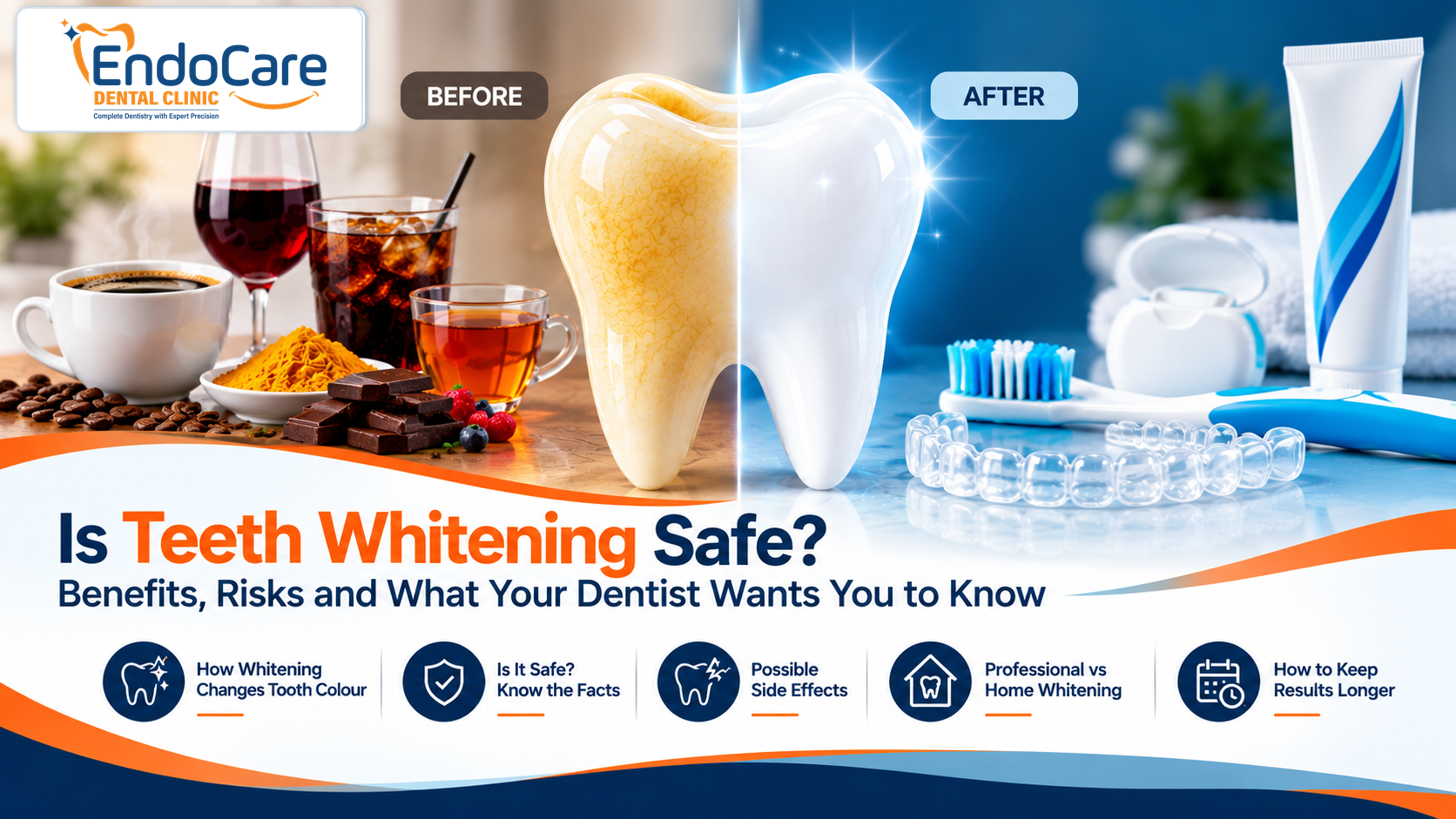
Is Teeth Whitening Safe? Benefits, Risks and What Your Dentist Wants You to Know
Is teeth whitening safe? If you are considering a brighter smile, it is important to understand how whitening works, what side effects to expect and when professional dental advice is necessary.
Professional teeth whitening can be a safe and effective cosmetic dental treatment for appropriately selected patients. However, existing cavities, gum disease, exposed roots, cracked teeth and poorly fitting whitening trays can increase the risk of sensitivity or irritation.
At EndoCare Dental Clinic in Viman Nagar, Pune, the right approach to teeth whitening starts with assessing your teeth and gums, understanding your expectations and choosing an appropriate treatment plan.
Whether you are considering professional teeth whitening in Pune or an over-the-counter whitening kit, this guide explains the benefits, risks, precautions and ways to maintain your results.
In This Article
-
How teeth whitening changes tooth colour
-
Professional teeth whitening vs home whitening kits
-
Who should avoid teeth whitening for now?
-
Teeth whitening side effects: sensitivity and gum irritation
-
How to maintain teeth whitening results
-
Teeth whitening as part of a smile makeover
-
Frequently asked questions about teeth whitening
How Teeth Whitening Changes Tooth Colour
Teeth whitening uses bleaching ingredients, commonly hydrogen peroxide or carbamide peroxide, to break down coloured compounds responsible for discolouration within the tooth.
The results depend on the original tooth shade, the cause of staining, the whitening product and how the treatment is performed.
Common causes of tooth discolouration
-
Food and drink stains: Tea, coffee and other strongly coloured foods and beverages can contribute to staining over time.
-
Age-related yellowing: Teeth can appear darker as enamel changes with age and the underlying dentine becomes more visible.
-
Tobacco stains: Smoking and tobacco use can contribute to persistent discolouration.
-
Certain medications or dental trauma: Some types of discolouration are more difficult to improve with conventional whitening.
-
Dental restorations: Crowns, veneers and tooth-coloured fillings do not whiten in the same way as natural enamel.
Whitening generally works best for suitable teeth with common yellowing or surface-related discolouration. Grey or brown staining, medication-related discolouration and a single dark tooth may require a different assessment.
Does teeth whitening damage enamel?
When an appropriate product is used correctly, teeth whitening does not ordinarily remove enamel in the way abrasive scrubbing can. Nevertheless, unsuitable products, excessive use or incorrect application can cause problems, including tooth sensitivity and gum irritation.
A dental examination helps identify conditions that should be treated before whitening begins.
Professional Teeth Whitening vs Home Whitening Kits
If you are comparing professional teeth whitening in Pune with whitening strips, trays or online kits, consider how the product is used, its concentration and whether it is suitable for your teeth.
Professional teeth whitening
A dentist can examine your teeth and gums, identify existing dental problems and recommend a suitable whitening method. Depending on the treatment, the dentist may use an in-clinic whitening system or prescribe a dentist-supervised home whitening tray.
Professional supervision helps manage exposure to the whitening gel and reduces the likelihood of the product contacting the gums unnecessarily. It does not eliminate every risk or guarantee a particular shade.
Over-the-counter whitening products
Whitening strips and other regulated consumer products may be suitable for some people when used according to their instructions. However, they are not appropriate for every dental condition, and results vary.
Poorly fitting trays, excessive application or using several products together can increase the risk of irritation and sensitivity.
Are charcoal toothpaste and LED whitening gadgets safe?
Charcoal products do not bleach teeth in the same way as peroxide-based whitening products. Some abrasive formulations may wear tooth surfaces with repeated aggressive use.
Likewise, do not assume that an LED device sold online guarantees better whitening results. The effectiveness of a system depends on its formulation, application and evidence for the specific product.
The best teeth whitening treatment is one suited to your oral health, not simply the product promising the whitest result.
Who Should Avoid Teeth Whitening for Now?
Teeth whitening may need to be postponed until an existing dental problem is assessed or treated.
You should consult a dentist before starting whitening if you have:
-
Untreated cavities: Whitening can aggravate discomfort in a tooth with decay.
-
Gum disease or bleeding gums: Inflamed gum tissue may be more vulnerable to irritation.
-
Existing tooth sensitivity: The cause should be assessed before applying a bleaching product.
-
Cracked, chipped or heavily worn teeth: Damaged tooth structure may require attention first.
-
Gum recession or exposed roots: Exposed root surfaces can be particularly sensitive.
-
Multiple crowns, veneers or fillings: Whitening will not lighten these restorations, potentially creating an uneven shade.
-
A single darkened tooth: The cause may require individual treatment rather than whole-mouth whitening.
Pregnant or breastfeeding patients should discuss elective whitening with their dentist and healthcare professional; postponing cosmetic whitening may be advisable because safety evidence is limited. Whitening is also generally not recommended for children unless specifically assessed and indicated by a dental professional.
If you have several dental concerns, your dentist may recommend treating cavities, improving gum health or addressing sensitivity before considering cosmetic whitening.
Teeth Whitening Side Effects: Sensitivity and Gum Irritation
The most common side effects of teeth whitening are temporary tooth sensitivity and irritation of the gums or other soft tissues.
Tooth sensitivity after whitening
Some people experience brief discomfort when drinking cold water or breathing in cold air after whitening. This usually settles after the whitening course ends, but the duration and intensity vary.
To help reduce sensitivity:
-
Follow the product's instructions and avoid excessive applications.
-
Use a suitable desensitising toothpaste if recommended by your dentist.
-
Avoid combining multiple whitening products.
-
Tell your dentist if you already experience sensitivity before treatment.
-
Stop whitening and seek advice if pain is severe, persistent or worsening.
Gum irritation or burning
Whitening gel that contacts the gums can cause irritation or temporary whitening of the affected soft tissue. Poorly fitting trays and incorrect application can increase this risk.
If irritation occurs, stop using the product and follow its safety instructions. Seek dental advice if symptoms persist or are significant.
Can teeth whitening cause permanent damage?
Problems are more likely when whitening is used excessively, products are unsuitable or pre-existing dental disease is overlooked. Incorrect use may lead to significant sensitivity or soft-tissue injury.
Do not try to push through severe pain to complete a whitening course. A dentist can determine whether the symptoms are related to whitening or an underlying problem, such as a crack or inflamed dental pulp.
How to Maintain Teeth Whitening Results
Teeth whitening is not permanent. Your teeth can gradually become stained again, depending on your habits, oral hygiene and the type of discolouration.
To maintain your results:
-
Brush twice daily: Use a fluoride toothpaste and a soft-bristled toothbrush.
-
Clean between your teeth: Floss or use an appropriate interdental cleaner regularly.
-
Be mindful of staining drinks: Tea and coffee can contribute to new stains over time.
-
Avoid tobacco: Tobacco can discolour teeth and adversely affect oral health.
-
Attend regular dental check-ups: Professional cleaning can help manage surface stains and support gum health.
-
Use touch-up whitening only as advised: Follow the recommended frequency rather than repeatedly applying whitening products whenever your teeth look darker.
Acidic drinks, including some sports drinks and sparkling beverages, can contribute to enamel erosion when consumed frequently. Limiting prolonged sipping and maintaining good oral hygiene helps protect your teeth.
If you grind your teeth, ask your dentist whether a protective night guard is appropriate. A guard may help protect teeth from grinding damage, although it does not preserve whitening shade directly.
Teeth Whitening as Part of a Smile Makeover
Teeth whitening is one option within cosmetic dentistry, but it is not the right solution for every concern.
A dentist may recommend a broader treatment plan if you have uneven tooth shapes, gaps, worn edges, gum recession or visible restorations.
Teeth whitening before veneers or bonding
If you plan to have veneers or composite bonding, your dentist may recommend whitening your natural teeth first. The shade of the final restorations can then be planned around your desired tooth colour.
A suitable interval may be needed after whitening before selecting the final restoration shade, allowing the tooth colour to stabilise and any sensitivity to settle.
Remember that crowns, veneers and most tooth-coloured fillings do not become lighter with conventional bleaching. Existing restorations may therefore need separate cosmetic planning if their shade no longer matches your natural teeth.
Whitening a single dark tooth after root canal treatment
A tooth that becomes dark after trauma or root canal treatment needs an individual assessment. In selected cases, a dentist may consider internal bleaching, a specialised technique that differs from ordinary whitening strips or trays.
Internal bleaching is not suitable for every tooth and requires professional diagnosis and treatment planning.
Choosing a realistic tooth shade
Social media filters, studio lighting and image editing can make teeth appear much whiter than they look in everyday conditions. Natural teeth also vary in translucency and shade.
A dental consultation helps establish a realistic goal based on your existing tooth colour, restorations and oral health.
If you are considering teeth whitening in Viman Nagar, Pune, EndoCare Dental Clinic can assess your concerns and discuss whether whitening or another cosmetic dental treatment is appropriate.
Explore our Teeth Whitening Treatment in Viman Nagar, Pune page for more information.
Frequently Asked Questions About Teeth Whitening
1. Is professional teeth whitening safe?
Professional teeth whitening can be safe for suitable patients when the teeth and gums are assessed first and the treatment is performed according to appropriate instructions. Temporary sensitivity and gum irritation can occur. Existing cavities, gum disease and other dental problems should be addressed before whitening where necessary.
2. What are the side effects of teeth whitening?
The most common side effects are temporary tooth sensitivity and gum irritation. Excessive or incorrect use can increase the risk of discomfort and soft-tissue injury. Stop treatment and seek dental advice if symptoms are severe, persistent or worsening.
3. Is teeth whitening safe for sensitive teeth?
People with sensitive teeth should have the cause assessed before whitening. A dentist may recommend treating the underlying problem, using a desensitising product or adjusting the whitening approach. Whitening should not be continued through significant pain.
4. Is professional teeth whitening better than home whitening kits?
Professional treatment offers individual assessment and supervision, while suitable over-the-counter products may work for some people when used correctly. Neither option is ideal for every patient. The right choice depends on your oral health, the cause of discolouration and the product being considered.
5. How long do teeth whitening results last?
Results vary according to the original tooth shade, diet, tobacco use, oral hygiene and whitening method. Teeth can become stained again over time. Your dentist can advise whether occasional touch-ups are appropriate and how often they may be used safely.
6. Can teeth whitening remove yellow stains permanently?
Whitening can reduce certain types of yellow discolouration, but it does not permanently prevent new staining. Some types of discolouration respond less predictably and may require alternative treatment. Results depend on the cause of the colour change.
7. Can I whiten my teeth if I have crowns, veneers or fillings?
Yes, whitening may be possible for the surrounding natural teeth, depending on your oral health. However, crowns, veneers and most fillings will not lighten with conventional bleaching. Your dentist should assess the existing restorations to help avoid an uneven final shade.
8. Where can I get teeth whitening in Viman Nagar, Pune?
EndoCare Dental Clinic in Viman Nagar, Pune, offers dental consultations to assess tooth discolouration and discuss suitable treatment options. Call +91 90968 82602 or visit our Contact page to arrange a consultation. The clinic is open all seven days, from 10:00 AM to 9:00 PM.
Considering Teeth Whitening in Viman Nagar, Pune?
A brighter smile should not come at the expense of your dental health. Before starting a whitening kit or booking a cosmetic procedure, make sure your teeth and gums are healthy and your expectations are realistic.
At EndoCare Dental Clinic, we can assess tooth discolouration, discuss whitening suitability and help you understand the available options.
EndoCare Dental Clinic | Advanced Dentistry & Root Canal Specialist in Viman Nagar, Pune
Call: +91 90968 82602
Hours: Open all 7 days, 10:00 AM–9:00 PM
Medical disclaimer: This article provides general educational information and is not a substitute for an individual dental examination, diagnosis or treatment plan. Consult a dentist before starting teeth whitening, particularly if you have sensitivity, gum problems, dental restorations or untreated decay.
This article is general information from the EndoCare Dental Clinic team. It is not a diagnosis or a substitute for an examination by your dentist. Please consult a dentist for advice about your own teeth.