How to Clean Clear Retainers: Daily Care Guide | EndoCare Dental Clinic, VIman Nagar Pune.
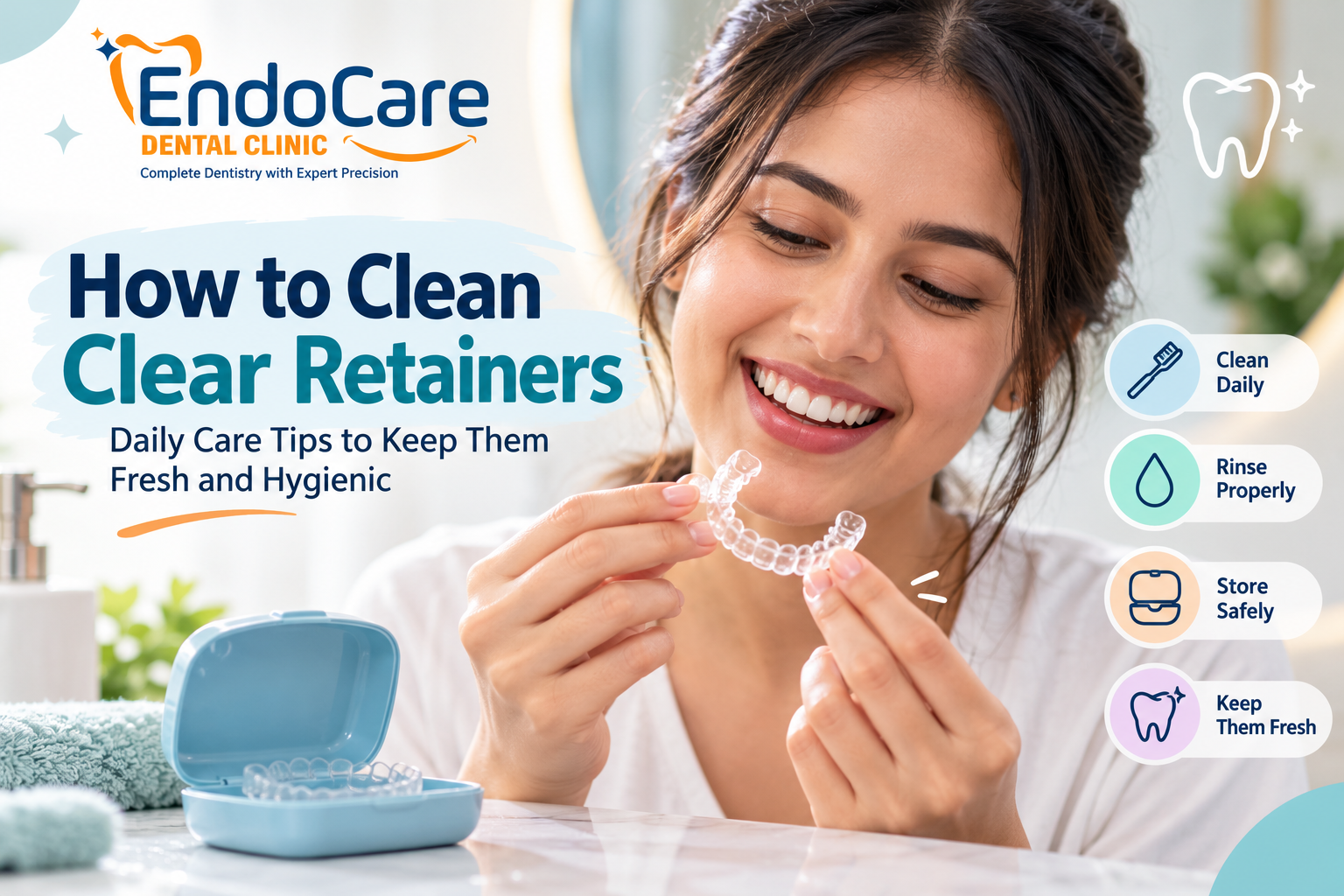
How to Clean Clear Retainers: Daily Care Tips to Keep Them Fresh and Hygienic
Have you finished braces or aligner treatment and now wear a clear retainer to help maintain your smile? Keeping your retainer clean is an important part of your daily oral hygiene routine.
Clear dental retainers are designed to fit closely over your teeth. Because they sit inside your mouth for extended periods, saliva, plaque and debris can accumulate on their surfaces. Over time, a retainer may develop a cloudy appearance, unpleasant odour or visible buildup if it is not cleaned properly.
The good news is that a consistent cleaning routine, safe storage and regular dental reviews can help keep your retainer in good condition.
Whether you wear a removable retainer after braces or have been advised to use a retainer following orthodontic treatment, this guide explains how to clean it, which habits to avoid and when to seek professional advice.
If you live in Viman Nagar, Pune, or nearby areas such as Kalyani Nagar, Wadgaon Sheri, Kharadi or Dhanori, these practical tips can help you maintain your retainer between dental appointments.
In This Article
-
Why Is Retainer Cleaning Important?
-
How to Clean Clear Retainers Step by Step
-
What Should You Avoid When Cleaning Retainers?
-
How to Store Your Retainer Safely
-
Signs Your Retainer Needs Attention
-
Frequently Asked Questions
-
When to Contact a Dentist
Why Is Retainer Cleaning Important?
A retainer helps maintain the position of your teeth after orthodontic treatment. However, like your teeth, it needs regular cleaning.
A retainer that is not cleaned properly may accumulate:
-
Plaque and saliva deposits.
-
Food particles and other debris.
-
Unpleasant odours.
-
Cloudy or whitish buildup.
-
Deposits that become more difficult to remove over time.
A dirty retainer can also make your mouth feel less fresh. Inadequate cleaning may contribute to oral hygiene problems, particularly if plaque accumulates around the teeth and gums.
Cleaning your retainer is therefore not simply about keeping it transparent. It is part of maintaining a healthy oral environment and helping the appliance remain usable.
Important: Different retainers are made from different materials. Always follow the cleaning instructions supplied by your orthodontist or dentist, particularly if your appliance has special components.
How to Clean Clear Retainers Step by Step
The following routine is suitable as general guidance for many removable clear plastic retainers. Your dentist's specific instructions should take priority.
1. Rinse the retainer after removing it
When you remove your retainer, rinse it with cool or lukewarm water to help wash away saliva and loose debris.
Rinsing soon after removal can make daily cleaning easier and reduce the amount of material that dries onto the surface.
Avoid hot water because heat may distort some plastic retainers and affect their fit.
2. Clean it gently every day
Use a soft toothbrush reserved for cleaning your retainer. Gently brush the appliance's inner and outer surfaces, taking care around grooves and edges where deposits may collect.
Use a cleaning product recommended for your particular retainer material. Some ordinary toothpastes contain abrasive ingredients that can scratch clear plastic, making the appliance appear dull or cloudy.
If you are unsure which product is suitable, ask your dentist rather than experimenting with household cleaners.
3. Clean your teeth before reinserting it
Before putting your retainer back in, brush your teeth and clean between them as part of your normal oral hygiene routine.
Food particles and plaque trapped against the teeth may remain in close contact with the tooth surfaces when a retainer is worn.
Clean hands are also important when handling your appliance.
4. Allow it to dry or store it as directed
After cleaning, follow the appliance manufacturer's or dentist's instructions for drying and storage.
When the retainer is not being worn, keep it in its designated clean case. Avoid wrapping it in a tissue or leaving it loose on a table, where it may be accidentally discarded, contaminated or damaged.
Some retainers may have specific storage requirements, so follow the advice given for your appliance.
5. Use a retainer cleaning product when appropriate
If your dentist recommends a retainer cleaning solution or tablet, follow the product instructions carefully.
Check that the product is suitable for your specific appliance. Do not assume that a cleaning product intended for dentures is automatically suitable for every clear retainer.
Use the recommended soaking time and rinse the appliance as directed before reinserting it.
6. Maintain regular dental reviews
Even when your retainer looks clean, it is important to attend dental reviews as advised.
A dentist can assess whether the appliance still fits correctly, whether deposits are accumulating and whether the teeth and gums remain healthy.
If your retainer has become uncomfortable or no longer fits properly, do not attempt to reshape it yourself.
What Should You Avoid When Cleaning Retainers?
Some cleaning methods can damage clear plastic or affect how a retainer fits.
Avoid hot or boiling water
High temperatures can distort certain plastic retainers. A retainer that has changed shape may no longer fit as intended.
Use the temperature recommended in your appliance's cleaning instructions.
Avoid abrasive toothpaste and harsh scrubbing
Abrasive products and vigorous brushing can scratch the surface of a clear retainer.
Scratches may make it appear cloudy and can create areas where deposits accumulate more easily.
Use a gentle cleaning method appropriate for the appliance material.
Do not use bleach or household cleaning chemicals
Household bleach, surface disinfectants and other cleaning chemicals are not substitutes for retainer cleaning products.
They may damage the material or leave residues that are unsuitable for contact with the mouth.
Use only products specifically recommended for your retainer.
Do not soak it in an unapproved solution
Alcohol-based mouthwash, vinegar, hydrogen peroxide and other home remedies are not universally suitable for every retainer.
Depending on the material and concentration, some solutions may damage the appliance or affect its appearance. Ask your dentist before using a soaking method that was not recommended for your retainer.
Do not eat with your retainer unless instructed
Many removable retainers should be removed before meals. Eating while wearing one can trap food, expose the appliance to chewing forces and make cleaning more difficult.
Follow the instructions given for your particular appliance.
If you wear clear aligners that are designed to be removed during meals, follow the wear schedule and eating instructions supplied with your treatment plan.
How to Store Your Retainer Safely
Correct storage helps protect a retainer from damage, contamination and accidental loss.
Keep these habits in mind:
-
Use a proper case: Store your retainer in its designated protective case when it is not being worn.
-
Keep the case clean: Clean it regularly according to the manufacturer's instructions and allow it to dry as directed.
-
Avoid loose storage: Do not leave the appliance on a bedside table, in a pocket or wrapped in a napkin.
-
Keep it away from heat: Avoid leaving it in a hot car or near a heat source.
-
Keep it away from pets and children: Retainers can be damaged or swallowed if left within reach.
-
Follow your prescribed wear schedule: Do not change how often you wear the retainer without advice from your orthodontist or dentist.
If you accidentally leave your retainer somewhere unhygienic, clean it using the recommended method before wearing it again.
Signs Your Retainer Needs Attention
Regular cleaning is important, but some changes require more than routine maintenance.
Persistent odour or visible buildup
If your retainer continues to smell unpleasant or has visible deposits despite appropriate cleaning, ask your dentist whether professional assessment or a different cleaning method is needed.
Do not use increasingly harsh chemicals to try to remove stubborn deposits.
Cloudiness or scratches
A clear retainer may become cloudy because of surface scratches, deposits or changes in the material.
If cleaning does not improve its appearance, have it assessed rather than using abrasive products.
Cracks, warping or rough edges
A cracked or distorted retainer may not fit correctly and could irritate the mouth.
Do not try to bend it back into shape, trim it or repair it using glue. Contact your dentist or orthodontist for advice.
Tightness or a change in fit
A retainer that suddenly feels unusually tight or does not seat properly should be assessed.
Do not force it into place. A change in fit may relate to the appliance, changes in tooth position or another issue that requires professional advice.
Gum irritation or mouth discomfort
If wearing your retainer causes persistent irritation, sores or discomfort, remove it if necessary for safety and contact your dentist for guidance.
If you experience significant swelling, severe pain or signs of infection, seek prompt professional assessment.
Clear Retainers vs Other Removable Dental Appliances
Not all removable dental appliances should be cleaned in the same way.
Clear retainers
Clear plastic retainers generally require gentle cleaning with products that are safe for their material. Heat and abrasive cleaning methods can affect their fit or appearance.
Hawley retainers
Hawley retainers typically combine an acrylic component with metal wires. Their cleaning instructions may differ from those for clear plastic retainers, particularly around the wire components.
Clear aligners
Clear aligners are used as part of active orthodontic treatment to move teeth. Their cleaning and wear instructions may differ from those for retainers used after treatment.
Dentures
Dentures have different materials and cleaning requirements. They should be cleaned with products suitable for the specific denture rather than assuming that retainer cleaning instructions apply.
If you are unsure which type of appliance you have, ask your dentist to identify it and explain the appropriate care routine.
Frequently Asked Questions About Retainer Care
1. How often should I clean my clear retainer?
Clean your removable retainer regularly, generally as part of your daily oral hygiene routine, and rinse it when you remove it. Follow your dentist's instructions for the specific material and cleaning product.
2. Can I clean my retainer with normal toothpaste?
Some toothpastes are abrasive and can scratch clear plastic retainers. A soft brush and a product recommended for your appliance are generally preferable. Ask your dentist which cleaning method is appropriate.
3. Why does my clear retainer smell bad?
Odour may develop when saliva, plaque and debris accumulate on the appliance. Improve your cleaning routine and keep the storage case clean. If the smell persists despite appropriate cleaning, seek dental advice.
4. Can hot water damage a clear retainer?
Yes. Hot water can distort some plastic retainers and affect their fit. Use cool or lukewarm water unless your dentist or the manufacturer provides different instructions for your particular appliance.
5. What should I do if my retainer no longer fits?
Do not force it into place or attempt to reshape it. Contact your dentist or orthodontist to assess the appliance and determine whether any treatment or replacement is needed.
6. Can I use the same cleaning method for retainers and dentures?
Not necessarily. Different appliances use different materials and may require different cleaning products. Follow the instructions for your specific appliance and ask your dentist before using a product intended for another type of device.
When to Contact a Dentist About Your Retainer
A retainer is an important part of maintaining the results of orthodontic treatment, but its condition and fit can change over time.
Arrange a dental review if your retainer remains dirty despite proper cleaning, develops persistent odour, becomes cracked or warped, or no longer fits comfortably.
If you are looking for dental guidance in Viman Nagar, Pune, EndoCare Dental Clinic provides dental consultations and offers braces and invisible aligner services. Patients from nearby areas, including Kalyani Nagar, Wadgaon Sheri, Kharadi and Dhanori, can contact the clinic to discuss their dental care needs.
Need advice about your retainer or orthodontic care?
Contact EndoCare Dental Clinic, Viman Nagar, Pune.
-
Phone: +91 90968 82602
-
Hours: Open all seven days, 10:00 AM–9:00 PM
-
Appointment: Contact EndoCare Dental Clinic
This article provides general educational information. Cleaning instructions can vary by appliance material and design. Follow your dentist's instructions and seek professional advice if your retainer is damaged or no longer fits properly.
This article is general information from the EndoCare Dental Clinic team. It is not a diagnosis or a substitute for an examination by your dentist. Please consult a dentist for advice about your own teeth.