Food Stuck Between Teeth: Causes & Treatment | EndoCare Dental Clinic, Viman Nagar Pune
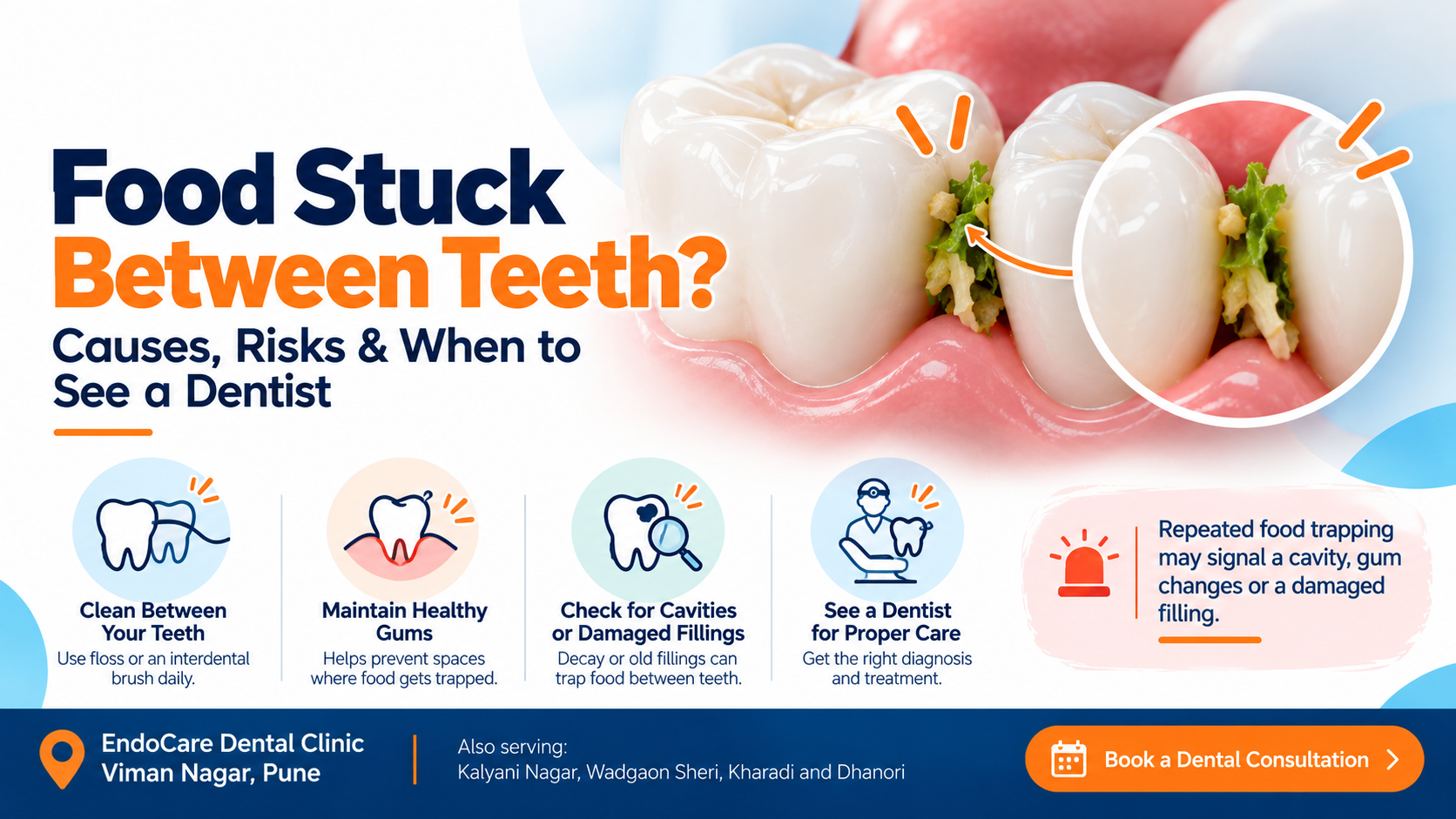
Introduction: Why Does Food Keep Getting Stuck Between Your Teeth?
Do you frequently find food trapped between your teeth after meals? Do you need to use your tongue repeatedly to remove food particles, or notice discomfort in your gums whenever you eat?
Occasionally getting food stuck between teeth is normal. However, if it happens repeatedly in the same spot, it may indicate an underlying dental problem that deserves attention.
Food can become trapped because of spaces between teeth, cavities, worn or damaged fillings, changes in gum support, or the way neighbouring teeth meet. When food remains lodged between the teeth, it can irritate the gums and make cleaning uncomfortable.
Ignoring the problem may allow plaque to accumulate around the affected area, increasing the risk of gum inflammation and tooth decay.
At EndoCare Dental Clinic in Viman Nagar, Pune, identifying the cause is an important part of deciding the right treatment. Depending on the findings, the solution may involve improving oral hygiene, repairing a cavity, replacing a defective filling or treating gum disease.
In this guide, we explain why food gets trapped between teeth, what you can safely do at home, when to see a dentist and which treatments may help prevent the problem from recurring.
In This Article
-
Why does food get stuck between teeth?
-
Common causes of food getting trapped
-
Is food getting stuck between teeth harmful?
-
How to remove trapped food safely
-
When should you visit a dentist?
-
Dental treatments that can help
-
Prevention tips and frequently asked questions
1. Why Does Food Get Stuck Between Teeth?
Healthy teeth normally have contact points where neighbouring teeth touch. These contacts, together with the surrounding gum tissues, help limit food from being forced into the spaces between teeth during chewing.
When the contact between two teeth is loose, damaged or altered, food can become trapped more easily.
For example, fibrous foods such as meat and vegetables may lodge between teeth, while small food particles may collect around a cavity or a defective filling.
Sometimes, food becomes trapped because the gums have receded, creating spaces that are difficult to clean. In other cases, a tooth may have shifted, or a dental restoration may no longer fit properly.
The important distinction is whether food gets trapped occasionally or repeatedly in the same location. Persistent food trapping, especially when accompanied by pain, bleeding or bad breath, warrants a dental examination.
2. Common Causes of Food Getting Stuck Between Teeth
A. Loose Contact Between Two Teeth
When neighbouring teeth do not meet firmly, food can be pushed into the gap while chewing.
You may notice that food repeatedly gets stuck between the same two teeth, particularly after eating fibrous or stringy foods.
A dentist can assess the contact between the teeth and determine whether a restoration, orthodontic issue or another factor needs attention.
B. Cavities Between Teeth
Dental decay can develop on the surfaces where two teeth touch. These cavities may be difficult to see without a dental examination and, sometimes, an X-ray.
As decay damages the tooth structure, food may begin collecting in the affected area. You might also experience sensitivity, discomfort when chewing or an unpleasant taste.
If a cavity is responsible, cleaning alone will not correct the problem. The dentist may recommend restoring the tooth with a filling or another suitable treatment.
Learn more about Dental Fillings in Viman Nagar, Pune.
C. Gum Recession and Spaces Between Teeth
Healthy gums help support the teeth and protect the underlying root surfaces.
When the gums recede or the supporting tissues are affected by periodontal disease, spaces can develop between the teeth or near the gumline. These spaces may collect food particles more easily.
Other possible signs include bleeding gums, persistent bad breath, tenderness or teeth appearing longer than before.
If gum disease or recession is suspected, a dental assessment can help determine the appropriate treatment.
Explore Gum Treatment in Viman Nagar, Pune.
D. A Damaged or Poorly Fitting Filling
Dental fillings restore teeth affected by decay or damage. However, an old, fractured or poorly fitting restoration may contribute to food trapping.
You may notice that food repeatedly catches around a previously treated tooth, or that the area feels different when you bite.
Do not try to adjust a filling yourself. Your dentist can check the restoration and determine whether it needs repair or replacement.
E. Shifting Teeth or Changes in Tooth Alignment
Teeth can gradually shift over time. Missing teeth, changes in bite relationships and other dental factors may alter the contact between neighbouring teeth.
Even a small change can affect how food moves between the teeth during chewing.
A dentist can assess whether the problem is related to tooth position, a missing tooth or another structural concern.
F. Missing Teeth
When a tooth is lost, neighbouring teeth may gradually move or tilt into the available space. This can alter the way food passes between the remaining teeth.
If food trapping develops around a missing tooth, your dentist can assess the surrounding teeth and discuss suitable options for restoring the missing tooth when appropriate.
G. Crowns or Other Dental Restorations
A crown, bridge or other restoration may sometimes contribute to food trapping if the contact between neighbouring teeth is inadequate or the restoration's shape is unsuitable.
If the problem started after a dental procedure, inform your dentist. The restoration can be assessed to determine whether an adjustment or other treatment is needed.
3. Is Food Getting Stuck Between Teeth Harmful?
Food trapping is not always dangerous, but repeated trapping can contribute to discomfort and oral health problems if the area is difficult to clean.
Gum irritation and bleeding
Food pressed against the gum tissue can irritate the area. You may notice tenderness or bleeding when brushing or flossing.
Persistent bleeding should not automatically be attributed to trapped food. It can also indicate gum inflammation or periodontal disease.
Plaque accumulation
When food debris remains between teeth, plaque can accumulate around the affected area. Plaque contains bacteria that contribute to tooth decay and gum disease.
Regular cleaning between teeth helps remove debris and disrupt plaque.
Tooth decay
Repeated food trapping can make an area more difficult to keep clean. If plaque remains undisturbed, the risk of decay may increase, particularly around susceptible tooth surfaces or existing restorations.
Bad breath or an unpleasant taste
Food debris and bacterial activity can contribute to an unpleasant smell or taste. Persistent bad breath may also have other causes, including gum disease, cavities or dry mouth.
Pain while chewing
Pain when food gets trapped may indicate gum irritation, a cavity, a damaged filling or another dental problem.
If chewing becomes uncomfortable, avoid repeatedly forcing food out of the space and arrange a dental assessment.
4. How to Remove Food Stuck Between Teeth Safely
If food becomes trapped after a meal, the following steps may help.
Step 1: Rinse your mouth with water
Gently rinse with plain water to help dislodge loose food particles.
Avoid vigorous rinsing if the area is painful.
Step 2: Use dental floss gently
Carefully guide floss between the teeth without snapping it down into the gums. Curve the floss around each tooth and move it gently along the sides.
If the floss repeatedly shreds, catches or causes significant pain, stop and consult your dentist.
Step 3: Consider an interdental cleaner
An appropriately sized interdental brush may help clean spaces between teeth, particularly where the gaps are wider.
The brush should fit comfortably. Never force a brush into a tight space, as this can injure the gums.
Step 4: Maintain gentle brushing
Brush twice daily using a soft-bristled toothbrush and fluoride toothpaste. Pay attention to the gumline and the surfaces around the affected teeth.
What should you avoid?
Do not use pins, needles, knives or other sharp objects to remove food. These can injure the gums and damage the tooth surface.
Avoid forcing toothpicks into tight spaces or repeatedly digging at the same area.
If food remains trapped despite gentle cleaning, or if the problem keeps recurring, seek professional advice rather than attempting increasingly forceful removal.
5. When Should You Visit a Dentist?
Occasional food trapping without pain may improve with appropriate cleaning. However, repeated food trapping in the same location should be assessed, particularly if you notice any of the following:
-
Food consistently gets stuck between the same two teeth.
-
Your gums bleed when food is removed.
-
The area becomes swollen, red or tender.
-
You experience pain while biting or chewing.
-
A filling or crown feels loose, rough or damaged.
-
You notice a visible cavity or a broken tooth.
-
Bad breath or an unpleasant taste persists.
-
Your gums appear to be receding or spaces between teeth are increasing.
Seek urgent dental care if you develop significant swelling, severe worsening pain, pus or fever alongside dental symptoms.
Difficulty breathing or swallowing, or rapidly spreading facial or neck swelling, requires emergency medical care.
If you are searching for a dentist in Viman Nagar, choose a dental professional who can identify the reason for repeated food trapping rather than simply recommending more aggressive cleaning.
At EndoCare Dental Clinic, an examination can help determine whether the issue is associated with tooth decay, gum disease, tooth position or a dental restoration.
6. Dental Treatments That Can Help
The best treatment depends on the cause of the food trapping. Not everyone needs a filling or another dental procedure.
Professional Cleaning and Scaling
If plaque, tartar or gum inflammation contributes to the problem, professional cleaning may be recommended.
Scaling removes hardened deposits that cannot be removed through ordinary brushing. Your dentist may also demonstrate appropriate flossing or interdental cleaning techniques.
Professional cleaning does not close an abnormal gap between teeth, but it can help maintain gum health and remove deposits that make cleaning difficult.
Learn more about Teeth Cleaning and Scaling in Viman Nagar, Pune.
Dental Fillings
If a cavity or defective restoration is responsible, the dentist may recommend a filling or replacement restoration.
The objective is to restore the affected tooth and its appropriate shape and contact with neighbouring teeth.
The treatment depends on the extent of the damage and the condition of the tooth.
Explore Dental Fillings at EndoCare Dental Clinic.
Gum Treatment
When food trapping is associated with gum disease, treatment may focus on reducing inflammation, controlling plaque and managing the health of the supporting tissues.
Established gum recession cannot always be reversed through routine cleaning alone. Your dentist can explain the options based on the extent and cause of the problem.
Read more about Gum Treatment in Viman Nagar, Pune.
Repair or Replacement of a Dental Restoration
If a filling or crown has an unsuitable contact or damaged margin, your dentist may recommend adjusting, repairing or replacing it.
The aim is to restore appropriate function and make the area easier to keep clean.
Assessment of Tooth Alignment
If teeth have shifted or the bite has changed, the dentist may recommend further assessment. Depending on the findings, options may include orthodontic treatment or another suitable approach.
Not every gap requires braces. Treatment should be based on the cause, the condition of the teeth and your individual needs.
Root Canal Treatment in Selected Cases
Food trapping alone does not mean you need a root canal.
However, if a cavity has progressed deep into the tooth and caused irreversible inflammation or infection of the dental pulp, root canal treatment may be necessary to preserve the tooth when it can be predictably restored.
Learn more about Root Canal Treatment in Viman Nagar, Pune.
7. How to Prevent Food Getting Stuck Between Teeth
Good oral hygiene can help reduce food debris and protect the gums, although it cannot correct every structural cause of food trapping.
Follow these practical steps:
1. Brush twice daily. Use a fluoride toothpaste and a soft-bristled toothbrush. Clean the gumline carefully.
2. Clean between your teeth daily. Use dental floss or an appropriately sized interdental brush to remove debris and plaque.
3. Choose the right interdental cleaner. Tight contacts may require floss, while wider spaces may be better suited to an interdental brush. Ask your dentist for guidance.
4. Avoid using sharp objects. Pins, needles and other sharp tools can injure your gums.
5. Do not ignore repeated food trapping. If food regularly gets stuck in one place, arrange a dental examination to identify the cause.
6. Maintain regular dental check-ups. Routine examinations can help identify cavities, damaged restorations and gum problems.
7. Address damaged fillings or crowns promptly. Report changes in the way your teeth fit together or how your restorations feel.
8. Seek advice about missing teeth. If tooth loss has changed the way you chew, your dentist can assess whether replacement or other treatment may help.
Prevention works best when everyday cleaning is combined with appropriate professional care.
Frequently Asked Questions About Food Getting Stuck Between Teeth
1. Why does food keep getting stuck between the same two teeth?
Repeated food trapping may result from a loose contact between the teeth, a cavity, a damaged filling, tooth movement or changes in the gums. A dental examination can help identify the cause and determine whether treatment is necessary.
2. Is food getting stuck between teeth a sign of a cavity?
It can be. Cavities between neighbouring teeth may create spaces where food accumulates. However, loose contacts, gum recession and defective restorations can cause similar problems. Your dentist may recommend an examination and, when indicated, an X-ray.
3. Why do my gums hurt when food gets stuck between my teeth?
Trapped food can press against and irritate the gums. Gum inflammation, periodontal disease or a nearby cavity may also contribute to the discomfort. Persistent pain, bleeding or swelling should be assessed by a dentist.
4. How do I remove food stuck between my teeth without hurting my gums?
Rinse gently with water and use dental floss carefully, guiding it between the teeth without snapping it into the gums. An appropriately sized interdental brush may help with wider spaces. Avoid pins, needles and forceful probing.
5. Can food getting stuck between teeth cause bad breath?
Yes. Retained food debris and bacterial activity can contribute to unpleasant breath or taste. Persistent bad breath can also be associated with gum disease, cavities, dry mouth or other conditions, so it should not always be attributed to food trapping alone.
6. Do I need a dental filling if food keeps getting trapped?
Not necessarily. A filling may be recommended if a cavity or defective restoration is responsible. If the cause is gum recession, tooth movement or another issue, a different approach may be more appropriate.
7. Can professional teeth cleaning stop food from getting stuck?
Professional cleaning can remove plaque and tartar and improve gum health. However, it will not necessarily correct a loose contact, cavity or structural gap between teeth. The cause should be assessed if the problem continues.
8. Where can I get treatment for food getting stuck between teeth in Viman Nagar, Pune?
EndoCare Dental Clinic in Viman Nagar, Pune, provides dental consultations and treatment planning for concerns involving tooth decay, gum health and other dental conditions. Contact the clinic to arrange an assessment and discuss suitable options.
Conclusion: Do Not Ignore Repeated Food Trapping
Food getting stuck between teeth may seem like a minor inconvenience, but repeated trapping can indicate a cavity, a loose contact, gum recession or a problem with an existing dental restoration.
Gentle flossing, suitable interdental cleaning and regular brushing can help maintain oral hygiene. However, persistent food trapping, gum bleeding or pain should be assessed to identify the underlying cause.
If you are looking for a dental clinic in Viman Nagar, Pune, EndoCare Dental Clinic can help assess your symptoms and explain the treatment options appropriate for your needs.
EndoCare Dental Clinic, Viman Nagar, Pune
Led by: Dr. Mugdha Bichile Pimplapure, BDS, MDS
Clinical focus: Conservative Dentistry and Endodontics
Clinic hours: Open all 7 days, 10:00 AM–9:00 PM
Phone: +91 90968 82602
Book a consultation: Visit EndoCare Dental Clinic
Medical disclaimer: This article is for general educational purposes and does not replace an individual dental examination, diagnosis or treatment plan.
This article is general information from the EndoCare Dental Clinic team. It is not a diagnosis or a substitute for an examination by your dentist. Please consult a dentist for advice about your own teeth.