Fluoride Treatment for Kids: When & Why? | EndoCare Dental Clinic, Pune
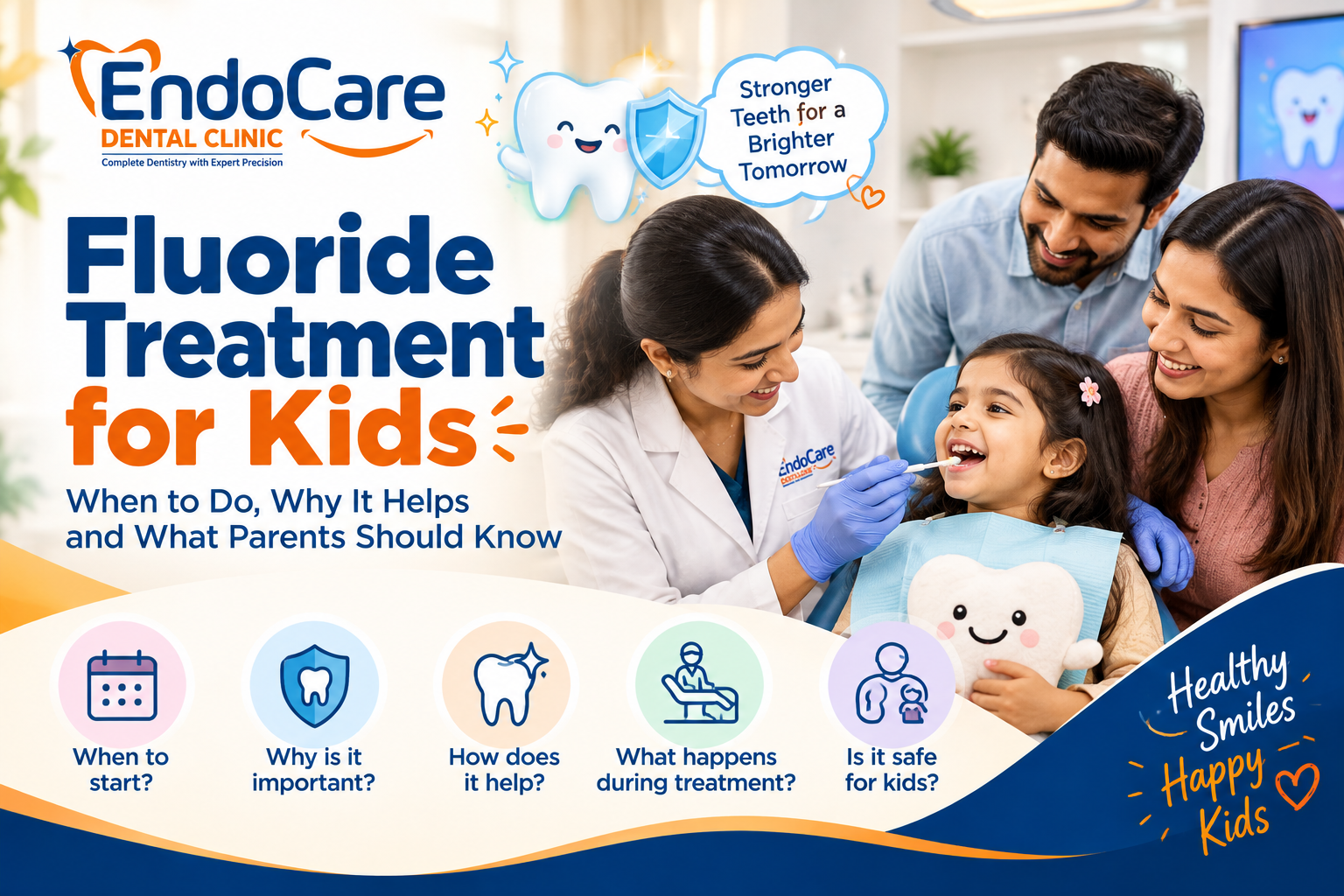
Fluoride Treatment for Kids: When to Start, Why It Helps and What Parents Should Know
Your child's baby teeth may be temporary, but keeping them healthy is important. Healthy primary teeth help children chew comfortably, support speech development and maintain space for their developing permanent teeth.
One preventive option your child's dentist may recommend is professional fluoride treatment. Fluoride helps strengthen tooth enamel, supports the repair of early mineral loss and reduces the risk of dental cavities.
But when should children receive fluoride treatment? Is it necessary if they already brush with fluoride toothpaste? Is it safe for toddlers? And does every child need it at the same age?
This guide explains what parents should know about fluoride treatment for children, including when it may be recommended, how it works, what happens during the appointment and how to protect your child's teeth at home.
In This Article
-
What is fluoride treatment for kids?
-
Why is fluoride important for children's teeth?
-
When should a child start fluoride treatment?
-
Does every child need professional fluoride treatment?
-
What happens during the treatment?
-
Is fluoride treatment safe?
-
How can parents prevent cavities at home?
-
Frequently asked questions
What Is Fluoride Treatment for Kids?
Fluoride is a naturally occurring mineral that helps protect teeth against decay. It strengthens enamel and helps the tooth surface resist acids produced when oral bacteria break down sugars.
Professional fluoride treatment involves applying a concentrated fluoride product to the teeth under the guidance of a dental professional.
One commonly used option is fluoride varnish. The dentist applies a thin layer to the tooth surfaces, following the product's instructions and appropriate precautions.
Professional fluoride treatment is different from daily brushing with fluoride toothpaste. Toothpaste provides regular fluoride exposure at home, while a professional application provides an additional preventive measure when appropriate.
The American Academy of Pediatric Dentistry (AAPD) recognises fluoride as an effective method for preventing and controlling dental caries in children. It recommends that decisions about fluoride use consider each child's individual needs and cavity risk.
Why Is Fluoride Important for Children's Teeth?
Children's teeth can be vulnerable to decay, particularly when brushing is inconsistent, sugary foods and drinks are consumed frequently, or a child has already developed cavities.
Fluoride can help protect both baby teeth and permanent teeth.
1. It Helps Strengthen Tooth Enamel
Enamel is the hard outer layer that protects each tooth. Acids can remove minerals from enamel, beginning the process that may lead to cavities.
Fluoride helps enamel resist acid attacks and supports remineralisation—the process through which minerals are restored to weakened areas of the tooth surface.
2. It Helps Prevent Dental Cavities
Fluoride can reduce the likelihood of tooth decay when used as part of an appropriate preventive routine.
It is especially valuable for children who have an increased risk of cavities because of previous decay, frequent sugar exposure, difficulty maintaining oral hygiene or other individual risk factors.
However, fluoride treatment does not eliminate the risk of cavities completely. Brushing, dietary habits and regular dental assessments remain important.
3. It Can Benefit Both Baby Teeth and Permanent Teeth
Baby teeth matter even though they eventually fall out.
Untreated decay in primary teeth can cause pain, infection and difficulty eating. Protecting baby teeth also helps children establish healthy oral-care habits.
As permanent teeth begin to emerge, fluoride can help protect these newly erupted teeth as well.
4. It Provides Additional Protection Alongside Home Care
Professional fluoride treatment is not intended to replace brushing or good dietary habits.
Instead, it may provide an additional layer of prevention when the dentist considers it appropriate for the child's oral health.
When Should a Child Start Fluoride Treatment?
There is no single age at which every child must receive professional fluoride treatment.
Children should have their first dental visit when the first tooth appears, or no later than their first birthday. At that visit, the dentist can assess the child's teeth, discuss cavity prevention and determine whether professional fluoride treatment is appropriate.
Professional fluoride varnish may be recommended for young children, including toddlers, depending on their cavity risk and clinical needs. The AAPD supports professionally applied fluoride for children at risk of tooth decay and recommends age-appropriate precautions when treating younger children.
The following guide provides a general overview. It is not a fixed treatment schedule for every child.
Infants and toddlers
Once the first tooth appears, parents should begin cleaning it with an age-appropriate amount of fluoride toothpaste.
A dental professional can assess the child's early teeth, feeding habits, fluoride exposure and cavity risk. Professional fluoride varnish may be recommended when appropriate.
Preschool children
As more baby teeth erupt, the dentist can review brushing habits, diet, previous cavities and the child's ability to cooperate with oral care.
Children with an increased risk of decay may benefit from professional fluoride applications at intervals recommended by the dentist.
School-age children
When permanent teeth begin to erupt, fluoride can continue to support cavity prevention.
The dentist can reassess the child's risk based on previous decay, oral hygiene, diet, orthodontic appliances and other relevant factors.
Older children and teenagers
Fluoride may remain useful during adolescence, especially for children with a history of cavities or additional risk factors.
The type and frequency of fluoride treatment should be based on individual needs rather than age alone.
Does Every Child Need Professional Fluoride Treatment?
Not every child needs the same preventive treatment at the same frequency.
During a dental examination, the dentist may consider:
-
Whether the child has had cavities before.
-
Whether there are early signs of enamel demineralisation.
-
How effectively the child brushes.
-
How frequently the child consumes sugary snacks and drinks.
-
Whether the child has braces or other factors that make cleaning difficult.
-
The child's exposure to fluoride from toothpaste, drinking water and other sources.
-
Any relevant medical or developmental considerations.
A child with previous cavities or a higher risk of decay may benefit from more frequent professional fluoride applications than a child with a lower risk.
Your dentist can explain the reasoning behind the recommendation and the appropriate interval for your child.
What Happens During Professional Fluoride Treatment?
Many parents wonder whether fluoride treatment is complicated or uncomfortable.
Professional fluoride application is generally a brief preventive procedure, although the exact process depends on the product and the child's needs.
Step 1: Examination of the teeth
The dentist examines the child's teeth and gums and assesses the risk of cavities.
If decay or another dental problem is present, the dentist explains whether it requires separate treatment.
Step 2: Choosing the appropriate fluoride product
The dentist selects a suitable product based on the child's age, oral health and clinical requirements.
For children younger than six, the AAPD identifies 5% sodium fluoride varnish in unit-dose packaging as the recommended professional topical fluoride option, taking account of safety considerations.
Step 3: Applying the fluoride
The dentist applies the fluoride product to the appropriate tooth surfaces according to its instructions.
The application is generally quick. The dentist takes appropriate precautions to minimise swallowing and ensure the treatment is suitable for the child.
Step 4: Aftercare instructions
Parents receive instructions about eating, drinking, brushing or other precautions after the application. These instructions vary by product, so follow the guidance provided by the treating dental professional.
Step 5: Planning the next preventive visit
The dentist recommends a follow-up interval based on the child's cavity risk and overall oral health.
Professional fluoride treatment may be repeated periodically when appropriate, but the schedule should be individualised.
Is Fluoride Treatment Safe for Children?
Fluoride is widely used in evidence-based cavity prevention. When appropriate products are used in suitable amounts and applied according to professional guidance, fluoride treatment is considered an effective preventive measure.
However, the amount and method of fluoride exposure matter, particularly for young children who may swallow toothpaste or other products.
Excessive fluoride ingestion while teeth are developing can increase the risk of dental fluorosis, which may cause changes in the appearance of developing enamel.
Parents can help reduce this risk by:
-
Supervising toothbrushing.
-
Using the age-appropriate amount of fluoride toothpaste.
-
Keeping toothpaste and fluoride products out of reach of young children.
-
Avoiding unprescribed fluoride supplements.
-
Telling the dentist about other fluoride sources the child may receive.
Do not give fluoride supplements or use concentrated fluoride products without professional advice. The dentist should consider the child's overall fluoride exposure and cavity risk before recommending additional fluoride.
If you have concerns about fluoride, discuss them with your child's dentist. The aim is to balance the benefits of cavity prevention with appropriate use and safety precautions.
How Much Fluoride Toothpaste Should Children Use at Home?
Professional fluoride treatment works alongside daily brushing. The amount of toothpaste should be appropriate for the child's age, and brushing should be supervised by a parent or caregiver.
General AAPD guidance recommends:
-
Younger than 3 years: A smear or rice-grain-sized amount of fluoride toothpaste.
-
3–6 years: No more than a pea-sized amount of fluoride toothpaste.
Parents should supervise brushing to help children use the correct amount and spit out toothpaste when able.
Brush twice daily using an age-appropriate toothbrush and fluoride toothpaste. For young children, caregivers should do or assist with brushing until the child can clean all tooth surfaces effectively.
Ask your dentist if you are uncertain about the appropriate toothpaste for your child's age or dental needs.
Five Ways to Reduce Your Child's Risk of Cavities
Fluoride treatment is only one part of cavity prevention. These everyday habits also matter.
1. Brush twice daily
Make brushing part of the morning and bedtime routine. Supervise young children and help them clean all tooth surfaces.
2. Limit frequent sugary snacks and drinks
The frequency of sugar exposure matters. Try to keep sugary foods and drinks to mealtimes rather than offering them repeatedly throughout the day.
Avoid putting a child to bed with a bottle containing milk, formula, juice or other sweetened drinks unless specifically advised otherwise by the child's healthcare professional.
3. Encourage water between meals
Water can help rinse away food debris and is generally a good everyday drink.
The suitability of drinking water as a fluoride source varies by location and supply. Do not assume that all bottled or household water contains the same fluoride concentration.
4. Arrange regular dental assessments
A dentist can identify early signs of decay, assess cavity risk and recommend appropriate preventive care.
Do not wait until your child has toothache to arrange a dental visit.
5. Treat existing cavities promptly
Fluoride may help prevent decay and support early mineral repair, but it does not restore every cavity once a hole has formed.
If a child has visible decay, toothache or sensitivity, the dentist should assess whether restorative treatment is needed.
When Should You Book a Dental Visit for Your Child?
Arrange a dental appointment if you notice:
-
White, chalky areas or brown spots on the teeth.
-
Visible holes or dark areas that may indicate decay.
-
Sensitivity or pain when eating.
-
Swelling around a tooth or gum.
-
Difficulty chewing.
-
Previous cavities or concerns about repeated decay.
Seek urgent dental advice if your child has significant tooth pain, facial swelling or suspected infection. Difficulty breathing or swallowing, or rapidly spreading facial or neck swelling, requires emergency medical care.
Even if your child has no symptoms, a routine dental assessment can help determine whether professional fluoride treatment is appropriate.
Fluoride Treatment for Kids in Viman Nagar, Pune
Preventive dental care during childhood can help parents identify risks early and build healthy oral-hygiene habits.
At EndoCare Dental Clinic in Viman Nagar, Pune, parents can seek advice about their child's teeth, cavity prevention and appropriate dental care.
The clinic serves families from Viman Nagar and nearby areas, including Kalyani Nagar, Wadgaon Sheri, Kharadi and Dhanori. These are nearby service areas, not separate EndoCare branches.
If you are unsure whether your child needs fluoride treatment, a dental assessment can help evaluate their teeth, cavity risk and existing fluoride exposure before deciding on the appropriate preventive plan.
Book a dental consultation with EndoCare Dental Clinic in Viman Nagar, Pune, to discuss your child's oral health and cavity-prevention needs.
EndoCare Dental Clinic
Viman Nagar, Pune
Phone: +91 90968 82602
Hours: 10:00 AM–9:00 PM, all seven days
Frequently Asked Questions About Fluoride Treatment for Kids
1. At what age can a child receive professional fluoride treatment?
Professional fluoride varnish may be recommended for young children, including toddlers, depending on their cavity risk and clinical needs. A child's first dental visit should occur when the first tooth appears or no later than the first birthday. The dentist can determine whether fluoride treatment is appropriate.
2. Why do children need fluoride treatment if they already use fluoride toothpaste?
Fluoride toothpaste provides regular protection at home. Professional fluoride treatment may provide additional protection for children who need it, particularly those at increased risk of cavities. It does not replace brushing or good dietary habits.
3. Is fluoride treatment safe for toddlers?
Professional fluoride varnish is used in young children when appropriate, with age-specific precautions. The dentist selects the suitable product and takes measures to minimise swallowing. Parents should supervise toothpaste use and avoid giving fluoride supplements without professional advice.
4. How often should children receive fluoride treatment?
There is no universal schedule for every child. The appropriate interval depends on cavity risk, previous decay, age and other oral-health factors. Your child's dentist can recommend an individual schedule.
5. Can fluoride treatment repair a cavity?
Fluoride can support remineralisation of early mineral loss and help prevent decay from progressing. However, a cavity that has developed into a hole may require restorative treatment. A dentist must assess the tooth to determine what is needed.
6. Does professional fluoride treatment replace brushing?
No. Children should continue brushing twice daily with an age-appropriate amount of fluoride toothpaste under parental supervision. Professional treatment is an additional preventive measure when recommended.
Give Your Child a Strong Start in Oral Health
Fluoride can play an important role in protecting children's teeth, but the best preventive plan depends on the child's individual needs.
Professional fluoride treatment may be recommended for infants, toddlers, school-age children or teenagers when the dentist identifies a reason for additional cavity protection. The appropriate product and frequency should be based on an assessment rather than a fixed age alone.
Combine professional guidance with supervised brushing, sensible dietary habits and regular dental assessments to help protect your child's teeth as they grow.
If you are looking for children's dental care in Viman Nagar, Pune, contact EndoCare Dental Clinic to discuss your child's oral-health needs and arrange a consultation.
Medical disclaimer: This article provides general oral-health information and is not a substitute for an individual dental examination or personalised treatment advice.
This article is general information from the EndoCare Dental Clinic team. It is not a diagnosis or a substitute for an examination by your dentist. Please consult a dentist for advice about your own teeth.