Dental Erosion: Causes & Prevention | EndoCare Dental Clinic, Pune
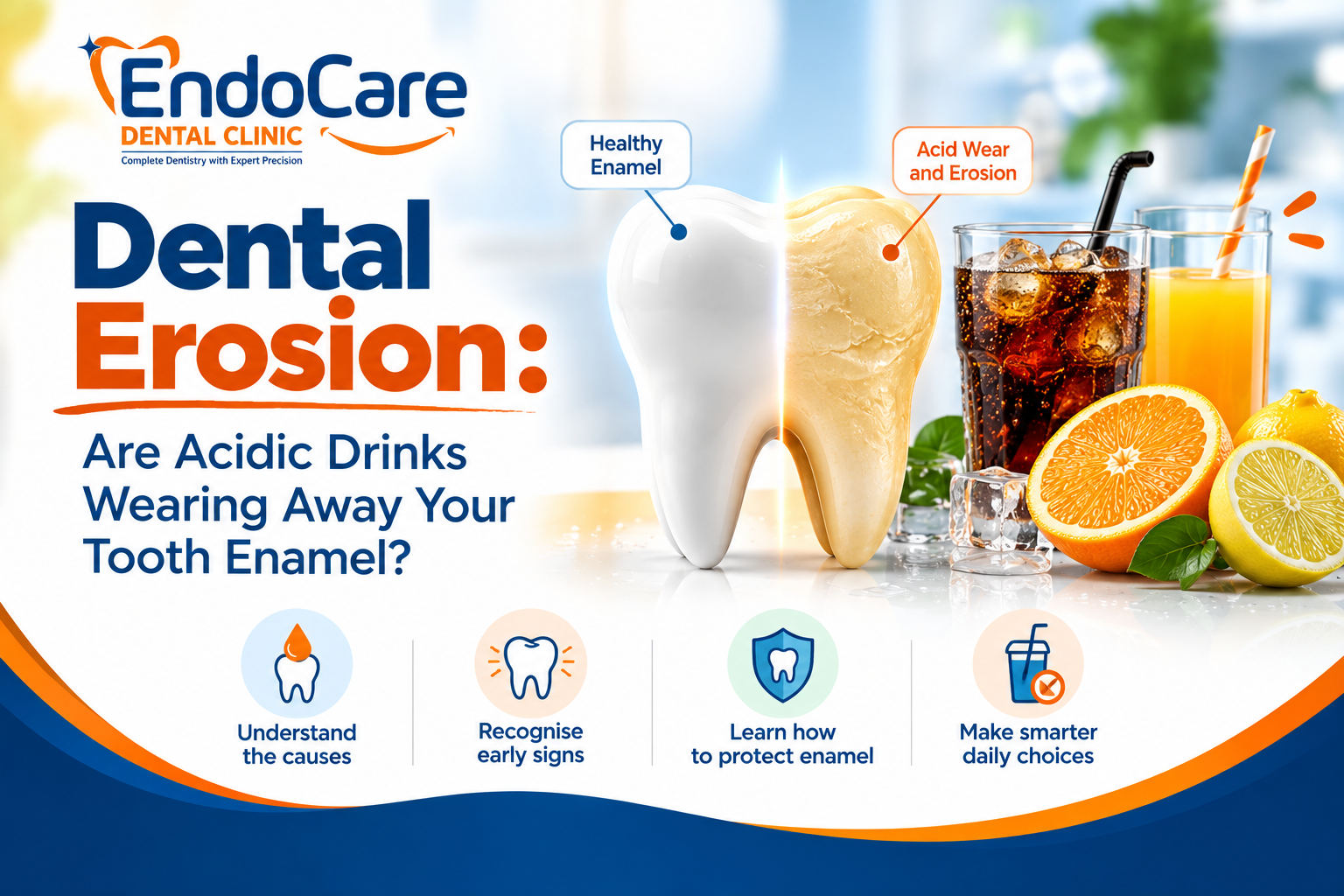
Dental Erosion: Are Acidic Drinks Wearing Away Your Tooth Enamel?
A glass of lemon water, a fruit juice with breakfast or a chilled soft drink on a warm afternoon may seem harmless to your teeth. However, frequently exposing your teeth to acidic foods and drinks can gradually wear away their protective outer layer.
This process is called dental erosion.
Unlike tooth decay, which involves acids produced by bacteria, dental erosion occurs when acids directly dissolve minerals from the tooth surface. Over time, this can lead to permanent loss of tooth structure.
The early changes may be difficult to recognise. Some people notice that their teeth look more yellow, feel unusually sensitive or develop smoother, thinner-looking edges.
Understanding what causes dental erosion and how to reduce repeated acid exposure can help you protect your natural teeth.
In this guide, we explain the common causes of enamel erosion, the signs to watch for and practical steps you can take to protect your teeth.
What Is Dental Erosion?
Dental erosion is the gradual loss of tooth structure caused by acids that are not produced by oral bacteria.
Your teeth are covered by enamel, a hard outer layer that protects the underlying dentine. Although enamel is highly mineralised, it can lose minerals when exposed to acids.
Saliva helps neutralise acids and supports the natural remineralisation of early mineral changes. However, frequent acid exposure can leave insufficient time for the tooth surface to recover, increasing the risk of progressive erosion. Oral Health Foundation
Dental erosion is different from tooth decay, although both conditions can affect the health and appearance of your teeth.
An important distinction: Early mineral changes may be reversible to some extent, but enamel that has physically worn away cannot simply grow back. Identifying the cause early can help limit further damage.
What Causes Dental Erosion?
Several everyday habits and medical conditions can expose teeth to acids.
1. Soft Drinks and Carbonated Beverages
Many soft drinks contain acids that can contribute to enamel erosion.
Sugar-free drinks are not automatically harmless to enamel. Even when a beverage contains little or no sugar, its acidity may still contribute to erosion.
The risk depends on factors such as the drink's acidity, how often you consume it and how long it remains in contact with your teeth. American Dental Association
Practical tip: If you enjoy acidic drinks, reduce how frequently you consume them and avoid sipping them continuously throughout the day.
2. Fruit Juices and Citrus Drinks
Orange juice, lemon juice and other citrus-based drinks contain naturally occurring acids.
Although fruit can be part of a balanced diet, frequent exposure to fruit juices and acidic drinks can affect tooth enamel.
Even lemon water without added sugar may be acidic enough to contribute to erosion when consumed frequently.
You do not necessarily need to eliminate every acidic food from your diet. Instead, pay attention to the frequency and duration of exposure.
3. Energy and Sports Drinks
Some energy and sports drinks contain acids that may contribute to enamel erosion.
People who consume these beverages regularly, particularly by sipping them over extended periods, may expose their teeth to repeated acid attacks.
If you use sports drinks during exercise, consider whether plain water is sufficient for your needs. Appropriate hydration depends on your activity and individual circumstances.
4. Acid Reflux and Repeated Vomiting
Not all dental erosion comes from food and drinks.
Stomach acid can reach the mouth during gastro-oesophageal reflux or repeated vomiting. This can expose the teeth to acid even when dietary habits are relatively good.
If you experience frequent acid reflux, discuss it with your doctor. Dental care can help assess and manage the effects on your teeth, but treating the underlying medical condition is also important. Healthdirect
5. Frequent Snacking on Acidic Foods
Repeatedly eating acidic foods throughout the day can increase the number of times your teeth are exposed to acid.
Examples include citrus fruits, sour sweets and foods containing vinegar.
The aim is not to avoid all nutritious foods that contain natural acids. Instead, try to reduce repeated exposure and consume acidic foods as part of meals rather than grazing on them throughout the day.
Seven Signs That May Suggest Dental Erosion
Dental erosion can develop gradually, and its early signs may be subtle.
The following changes deserve attention, although none of them confirms erosion without a dental examination.
1. Teeth Look More Yellow
Enamel is naturally lighter in colour than the dentine underneath it.
As enamel becomes thinner, the underlying dentine may become more visible, making teeth appear yellower.
This does not necessarily mean that your teeth need whitening. The cause of the colour change should be assessed before choosing a cosmetic treatment.
2. Increased Tooth Sensitivity
If enamel becomes thinner, the underlying tooth tissues may become more vulnerable to temperature changes.
You may notice discomfort when drinking something cold or hot, or when eating certain foods.
However, sensitivity has several possible causes, including gum recession, cavities and cracks. A dentist can help identify the reason.
3. Smooth or Shiny Tooth Surfaces
Erosion may change the natural texture and appearance of enamel.
Some affected surfaces can look unusually smooth or shiny. These changes may be difficult to identify without a professional examination.
4. Thinner or Translucent Front-Tooth Edges
The edges of the front teeth may appear thinner or more translucent as enamel is lost.
In more advanced cases, the edges may chip more easily.
If you notice changes in the shape or appearance of your teeth, arrange a dental assessment rather than attempting to correct them with whitening or abrasive products.
5. Small Depressions on Chewing Surfaces
Erosion can produce shallow depressions or cupping on the chewing surfaces of teeth.
These changes may be subtle at first but can become more noticeable as tooth structure is lost.
6. Increased Sensitivity to Acidic Foods
Some people notice discomfort when consuming citrus fruits, juices or other acidic foods.
This is not specific to erosion, but persistent sensitivity is a reason to seek advice.
7. Changes in Tooth Shape
Advanced erosion can change the shape and appearance of teeth.
If substantial tooth structure has been lost, the teeth may require restorative treatment to protect them and restore their function.
Do not wait for visible damage to become severe. A dental assessment can help determine whether enamel erosion is present and whether preventive or restorative measures are needed.
How Can You Protect Your Tooth Enamel?
The good news is that several everyday habits can reduce unnecessary acid exposure.
1. Reduce the Frequency of Acidic Drinks
Rather than sipping acidic drinks throughout the day, try to consume them less frequently and preferably with meals.
Frequent exposure can leave teeth with less time to recover between acid attacks.
Plain water is a useful everyday alternative when you are thirsty.
2. Rinse Your Mouth With Water Afterwards
After consuming an acidic drink or food, rinse your mouth with plain water.
This helps dilute and clear some of the acid remaining in the mouth.
Rinsing is a simple preventive measure, but it does not reverse enamel that has already been lost.
3. Avoid Brushing Immediately After Acid Exposure
Acid can temporarily soften the tooth surface.
Brushing immediately after an acidic drink, meal or episode of vomiting may increase wear on the softened enamel.
Wait at least 30 minutes before brushing after acid exposure; some dental guidance recommends waiting up to an hour. In the meantime, you can rinse with water. Oral Health Foundation
4. Brush Twice Daily With Fluoride Toothpaste
Use a soft-bristled toothbrush and fluoride toothpaste twice daily.
Brush gently rather than applying excessive pressure. Aggressive brushing can contribute to tooth wear, particularly when enamel has been softened by acid.
Avoid abrasive products or unverified whitening remedies if you are concerned about enamel loss.
5. Do Not Hold Acidic Drinks in Your Mouth
Avoid swishing acidic drinks around your teeth or holding them in your mouth before swallowing.
If you consume an acidic drink, reducing the time it remains in contact with your teeth may help limit exposure.
6. Address Persistent Acid Reflux
If you frequently experience heartburn, acid regurgitation or vomiting, consult your doctor about appropriate management.
Managing the underlying source of stomach acid is important because dental hygiene alone cannot prevent all acid exposure from reflux.
7. Arrange Regular Dental Assessments
Your dentist can look for changes in enamel, identify possible causes and recommend suitable preventive measures.
The appropriate follow-up interval depends on your oral health and individual risk factors.
If erosion is suspected, your dentist may discuss dietary changes, fluoride-based preventive measures or restorative treatment depending on the extent of damage.
Can Dental Erosion Be Reversed?
The answer depends on how much damage has occurred.
When the tooth surface has undergone early mineral loss without substantial physical destruction, saliva and appropriate preventive measures can support remineralisation.
However, enamel that has already been physically worn away does not regenerate naturally.
If erosion has progressed, treatment focuses on controlling the cause, protecting the remaining tooth structure and addressing sensitivity or structural damage.
Depending on the condition of the teeth, a dentist may recommend:
- Changes to dietary habits and oral hygiene.
- Fluoride-based preventive measures.
- Monitoring of affected teeth.
- Suitable restorative treatment where tooth structure has been lost.
Not everyone with enamel erosion needs fillings, crowns or cosmetic treatment. The appropriate plan depends on the extent of the damage and the patient's individual needs.
Is Dental Erosion the Same as Tooth Decay?
No. Dental erosion and tooth decay are different processes.
| Feature | Dental erosion | Tooth decay |
|---|---|---|
| Main cause | Direct exposure to acids | Acids produced by bacteria acting on fermentable carbohydrates |
| Primary effect | Chemical loss of tooth mineral | Demineralisation associated with the decay process |
| Possible early signs | Changes in surface appearance or translucency | White spots or other changes, depending on the stage |
| Prevention | Reduce repeated acid exposure and protect enamel | Control plaque, limit frequent sugar exposure and use fluoride |
| Treatment | Control the cause and protect or restore affected teeth as needed | Depends on the stage, from preventive care to restorative treatment |
Both conditions can affect the health of your teeth, and they can sometimes occur together.
A dental examination is the best way to distinguish between them and determine whether treatment is required.
Dental Erosion and Preventive Dental Care in Viman Nagar, Pune
Changes in tooth colour, shape or sensitivity can have several causes. Identifying the underlying problem is important before deciding whether you need preventive care, restorative treatment or another form of dental assessment.
At EndoCare Dental Clinic in Viman Nagar, Pune, patients can seek advice about their teeth, oral hygiene and appropriate dental treatment.
The clinic serves patients from Viman Nagar and nearby areas, including Kalyani Nagar, Wadgaon Sheri, Kharadi and Dhanori. These are nearby service areas, not separate EndoCare branches.
If you have noticed unusual tooth sensitivity, changes in enamel appearance or concerns about tooth wear, consider arranging a dental assessment.
Visit the EndoCare Dental Clinic website to learn about the clinic and its dental services.
Appointment CTA: Contact EndoCare Dental Clinic in Viman Nagar, Pune, to discuss your concerns and arrange a dental consultation.
Frequently Asked Questions About Dental Erosion
1. Can lemon water damage tooth enamel?
Lemon juice is acidic, so frequent exposure may contribute to enamel erosion. You do not necessarily need to avoid every citrus food or drink, but limiting repeated exposure, rinsing with water afterwards and avoiding immediate brushing can help protect your teeth.
2. Are sugar-free soft drinks safe for enamel?
Not necessarily. Sugar-free drinks can still contain acids that contribute to enamel erosion. Check the type of beverage you consume and avoid sipping acidic drinks continuously throughout the day.
3. Can lost tooth enamel grow back?
Enamel that has been physically worn away does not grow back naturally. Early mineral changes may be supported by saliva and appropriate preventive care, but established structural loss may require dental treatment.
4. Should I brush my teeth immediately after drinking fruit juice?
It is better to wait at least 30 minutes after an acidic drink before brushing; some guidance recommends waiting up to an hour. Rinsing your mouth with plain water in the meantime can help clear residual acid.
5. Does dental erosion always cause tooth sensitivity?
No. Erosion can develop without noticeable symptoms, particularly in its earlier stages. Sensitivity can occur as enamel is lost, but its presence or absence alone cannot establish whether erosion is occurring.
6. When should I see a dentist for suspected enamel erosion?
Arrange an assessment if you notice persistent sensitivity, yellowing, translucent edges, changes in tooth shape or unusual wear. A dentist can assess the cause and recommend suitable preventive measures or treatment.
Protect Your Enamel Before More Damage Occurs
Dental erosion can develop gradually, especially when teeth are exposed to acidic foods, drinks or stomach acid repeatedly.
Reducing the frequency of acid exposure, rinsing with water, using fluoride toothpaste and waiting before brushing can help protect your remaining enamel.
If you notice changes in the appearance or sensitivity of your teeth, do not assume that whitening or changing your toothbrush will solve the problem. An examination can help identify the cause and determine the appropriate next steps.
If you are looking for dental care in Viman Nagar, Pune, contact EndoCare Dental Clinic to discuss your oral-health concerns and arrange a consultation.
Medical disclaimer: This article provides general oral-health information and is not a substitute for an individual dental examination, diagnosis or treatment plan.
This article is general information from the EndoCare Dental Clinic team. It is not a diagnosis or a substitute for an examination by your dentist. Please consult a dentist for advice about your own teeth.